

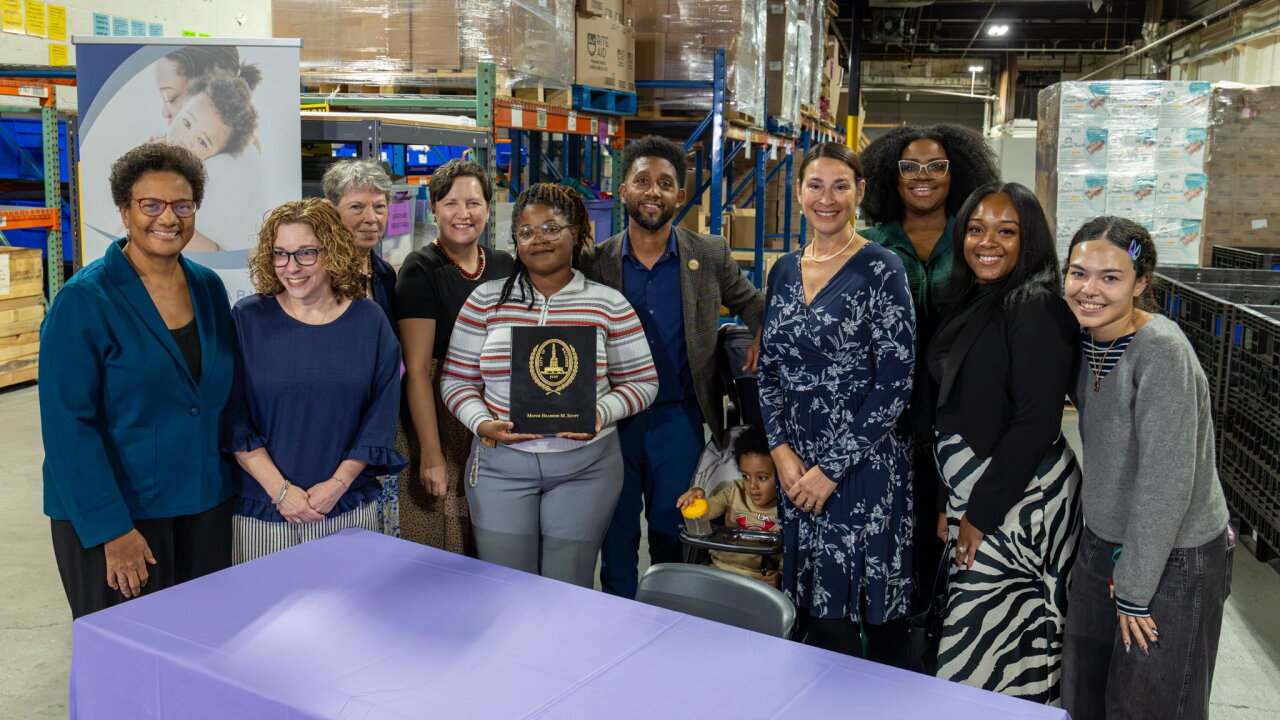

BALTIMORE — Baltimore Mayor Brandon Scott has signed an executive order outlining how the proposed Baltimore Baby Fund would provide financial assistance to families with newborns if voters approve the measure this fall.
The city says the fund would provide direct financial support and build on its Baltimore Young Families Success Fund guaranteed-income pilot.
Under the plan, all Baltimore City newborns enrolled in the program would be eligible for a one-time cash payment, though the amount has not yet been determined.
Some expectant and new parents could qualify for additional assistance based on eligibility criteria, including a payment during pregnancy, monthly cash assistance after their child is born and a contribution to a Maryland 529 college savings account. Families could also be connected with B'More for Healthy Babies for care coordination and health services.
The fund would be permanent and aimed at helping families cover expenses including childcare, transportation and food. Unspent money would remain in the fund from year to year.
But the measure still needs voter approval.
WMAR-2 News previously reported that the Baltimore Baby Fund will appear as Question I on the Nov. 3 ballot.
The proposal follows an earlier effort known as the Baltimore Baby Bonus, which sought to give new parents $1,000. In 2024, Scott and the city challenged that proposal in court, arguing it was not appropriate charter material. The Maryland Supreme Court ultimately blocked it from appearing on the 2024 ballot.
Advocates returned in 2025 with the redesigned Baltimore Baby Fund proposal. Unlike the original Baby Bonus, the new version offers fewer specifics and gives city leaders more discretion over how they would provide assistance.
By August, Scott was backing the new proposal. WMAR-2 News reported that Scott and the Maryland Child Alliance described the Baby Fund as an evolution of the city's guaranteed-income program.
That earlier program, the Baltimore Young Families Success Fund, provided 200 young parents with $1,000 a month for two years, using $4.8 million in federal COVID-related funding.
A 2024 report on the pilot found participating families had increased income and improvements in independent living and mental and emotional health compared with control-group families, according to Mayors & Counties for a Guaranteed Income.
This is a developing story, so check back with WMAR2News.com for updates. Email the WMAR-2 Newsroom if you have info, photos or videos to share.
 Facebook
 TikTok
 YouTube
 Instagram
 Threads
 X
This story was initially reported by a journalist and has been converted to this platform with the assistance of AI. Our editorial team verifies all reporting on all platforms for fairness and accuracy.

