



BALTIMORE, Md. — For many people diagnosed with breast cancer, one of the most visible and emotional side effects of treatment is hair loss.
When Melinda Fletcher of Elkridge learned she had breast cancer in March 2025, her focus quickly shifted from an unexpected diagnosis to concerns about what treatment would mean for her future and her sense of self.
"My oldest son was getting married at the time; all I thought about was, I'm not going to be able to make it to the wedding," she said. "I was gonna be losing my hair, so many emotions; it was very hard."
Fletcher said her long, curly hair has always been a source of comfort and confidence.
"A lot of people say hair isn't important, but until you have to lose it to take medication to help you live, it takes on a whole different meaning," she said.

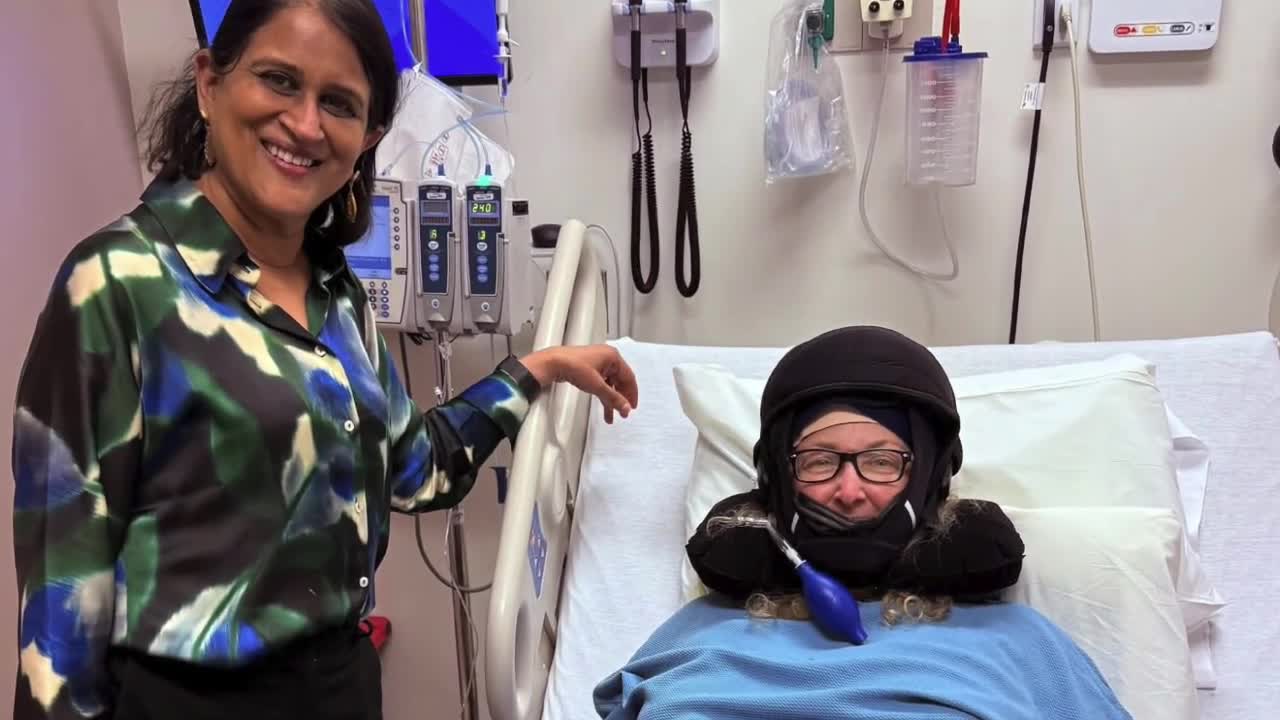
While undergoing treatment at Ascension Saint Agnes, Fletcher became the first patient at the hospital to use a new scalp-cooling therapy designed to reduce chemotherapy-related hair loss.
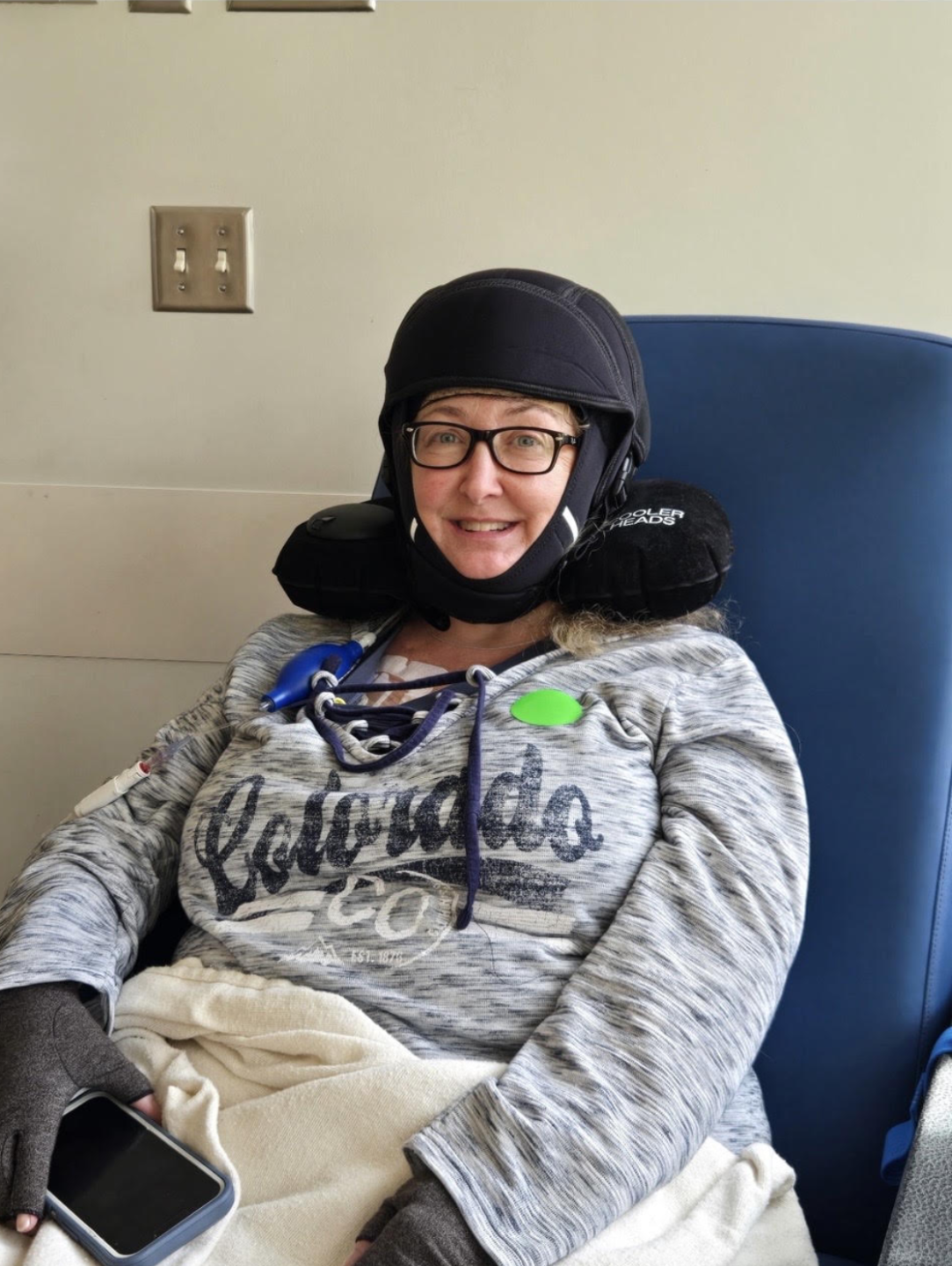
The treatment uses a specialized cap connected to a cooling system that circulates extremely cold water around the scalp during chemotherapy sessions.
"It's connected to a cooler; it circulates water, like very ice-cold water, around the cap," Fletcher explained. "It is very cold for the first 20 minutes, and your head just feels numb after that."
Dr. Suman Rao, chief of medical oncology at Ascension Saint Agnes, said cooling the scalp helps limit the amount of chemotherapy that reaches hair follicles. Which also helps patients emotionally.
"It's one less thing to worry about," Rao said. "I think it makes patients feel that much more willing to put up with chemotherapy. The thought that, okay, I have an option where maybe I don't lose my hair, it takes a burden off of the patient."
Rao said she worked for years to bring the technology to Ascension Saint Agnes and was finally able to launch the program in 2025 with Fletcher as its first patient.
"Women are very excited. Men, too," she said. "You'd be surprised how many men don't like the idea of losing their hair."
After months of treatment, Fletcher is now cancer-free and grateful she chose to try the therapy.
Although she estimates she lost about 70% of her hair during treatment, she believes the cooling therapy helped preserve much of it.
"It's all come back thicker than it was, curlier than it was. I feel like it was well worth it," Fletcher said.
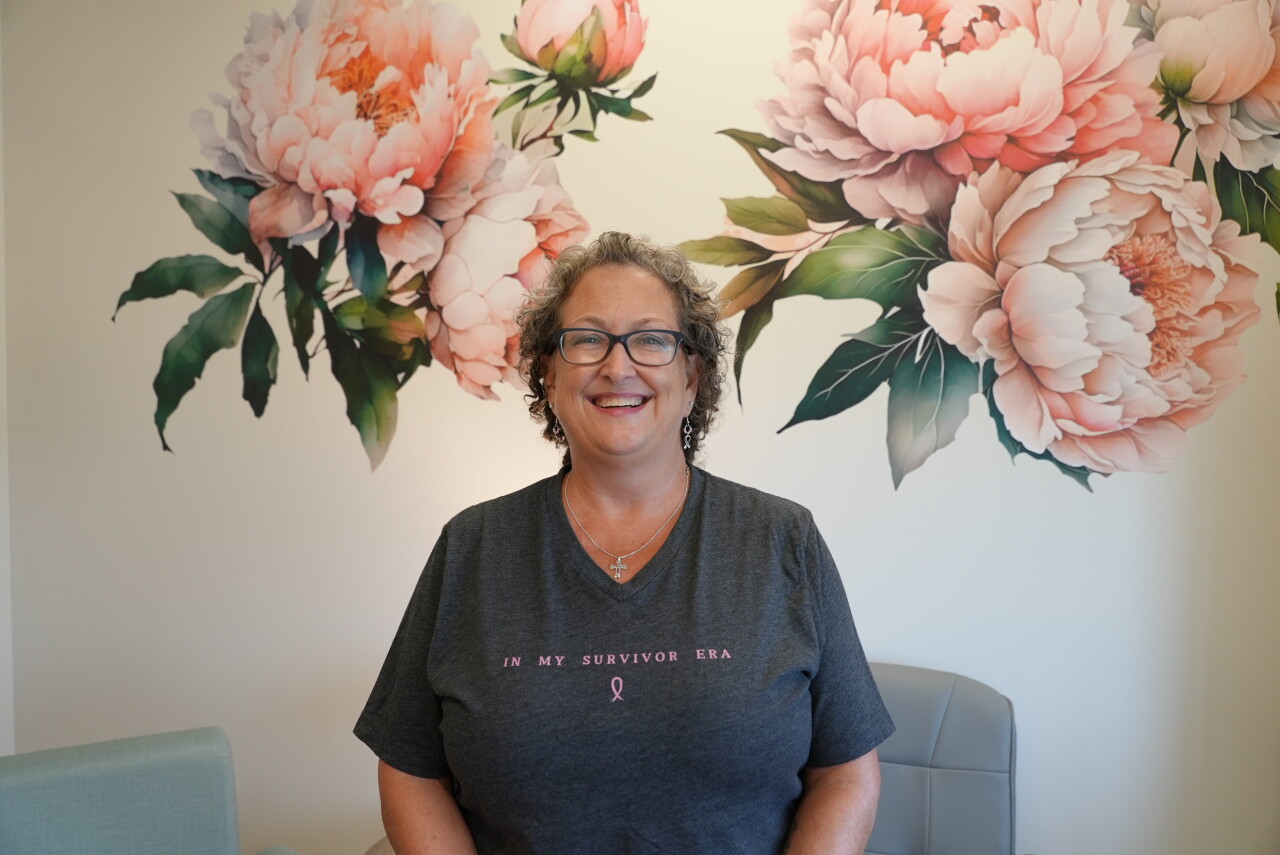
Today, Fletcher says she is embracing her "survivor era" and hopes her story encourages others facing similar challenges.
More than a dozen patients have since used the scalp-cooling treatment at Ascension Saint Agnes.
Rao hopes insurance coverage continues to expand, making the therapy accessible to more cancer patients.
 Facebook
  TikTok
  YouTube
 Instagram
 Threads
 X
X
