



BALTIMORE — For the first time, the FBI’s Internet Crime Report includes a new category for artificial intelligence-related fraud, a tactic already causing massive damage.
The FBI says Americans reported losing more than $20 billion to scams last year, the first time reported losses have reached that level. The agency also received more than 1 million complaints for the first time in the history of the report. Investigators say artificial intelligence is helping criminals scale their operations faster than ever, making scams harder to detect and more convincing.
"In just 3 years, the losses have doubled from $10 billion to $20 billion. Some of that may be new reporting, but it is just this continuation of organized, now utilizing AI, criminal organizations," said Supervisory Special Agent Keith Custer with the FBI Baltimore Field Office.
The FBI’s new AI-related fraud category logged more than 22,000 complaints and nearly $893 million in reported losses in its first year alone. Investigators say scammers are using artificial intelligence to clone voices, generate fake images and videos, create convincing phishing emails, and impersonate trusted people or businesses.
Custer said these aren’t just statistics. They are retirees, widows, and families losing life savings to scams designed to look and sound real.
"Just the other day my father sent me a couple of emails warning him of fraudulent charges on his credit card. He forwarded them to me so I could take a look, and it took me a minute. The links were to the actual website of his credit card, they had the last four digits of his credit card. If you click on some of the links, it took you to the legitimate website, but the 1-800 number in there was not associated with the credit card company.," Custer said.
The FBI says investment fraud remains the biggest driver of losses, accounting for nearly half of all money reported stolen. Victims reported more than $8 billion lost to investment scams last year alone. Romance scams also continue climbing, with reported losses topping $900 million.
But investigators say they are fighting back by calling and emailing people mid-scam to warn them.
"Operation Level Up is something that we continue to do. We've talked to thousands of victims, and I think in 2025 we estimated over $200 million in losses prevented just by contacting people in the midst of a scam," Custer said.
The agency is also conducting international takedowns, including a scam compound in Cambodia where investigators found the fraudsters’ playbook written out on a whiteboard.
Earlier this year, authorities shut down a massive fraud operation accused of stealing nearly $50 million from Americans by convincing victims their money was at risk and needed to be converted into gold or handed over for safekeeping.
"We kind of chopped it off at the knees at $48 million. In a year from now, it could’ve been over $100 million and hundreds of other victims could’ve been victimized, so it's a really big win for us today to take down this call center because it was operating at a pretty significant level," FBI Baltimore Special Agent Jeremy Capello said at a news conference in February.
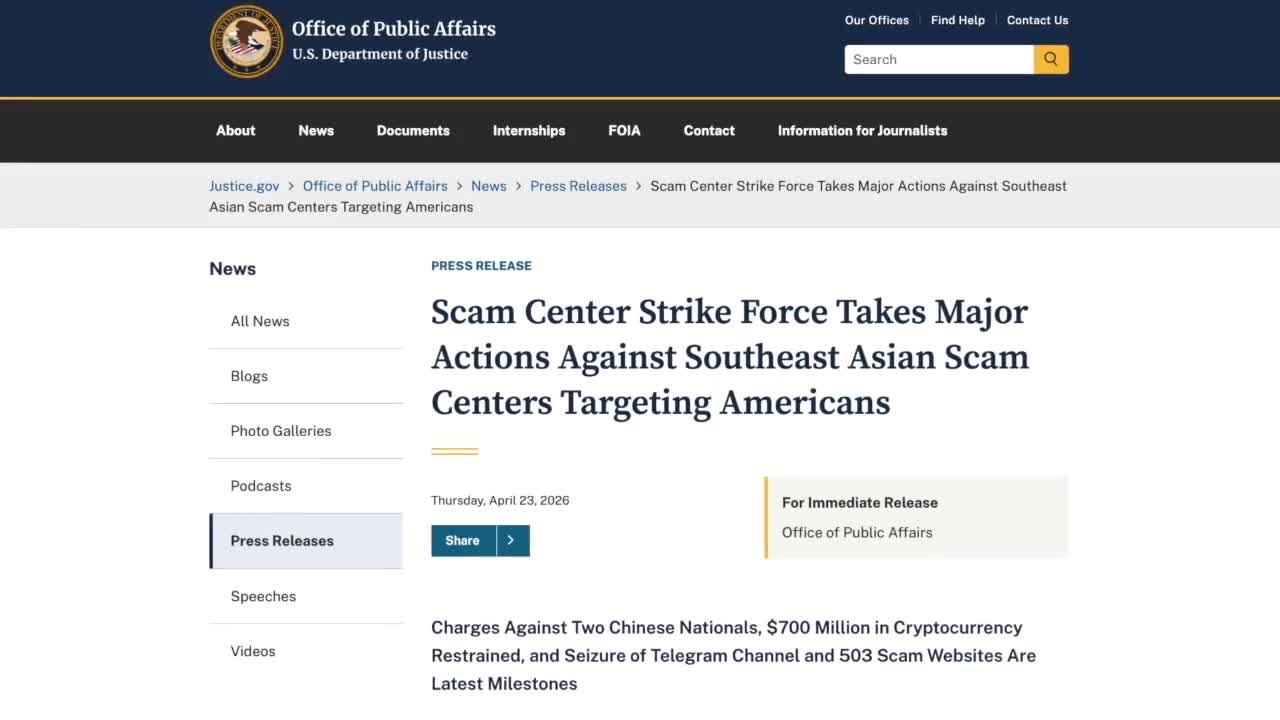
Just last week, the Scam Center Strike Force took action against Southeast Asian scam centers, seizing 500 fake investment websites and restraining more than $700 million in stolen cryptocurrency.
"The message is that the whole of the U.S. government is coming for you. So if this is how you choose to make money, then you're on a hit list and we're coming," Custer said.
The FBI says the best defense is to take a beat. Slow down, question any urgent requests for money or personal information, and look for red flags before you act.
The FBI Internet Crime Complaint Center now receives about 3,000 scam complaints every day. Investigators say even if you don’t get a response, reporting the crime still matters. Those complaints help track trends, build investigations, support prosecutions, and in some cases, help recover stolen money. To file a complaint, click here.
This story was reported on-air by a journalist and has been converted to this platform with the assistance of AI. Our editorial team verifies all reporting on all platforms for fairness and accuracy.