



BALTIMORE — If you are renovating your home or waiting on a planning approval, verify where payment requests are coming from before paying any fees.
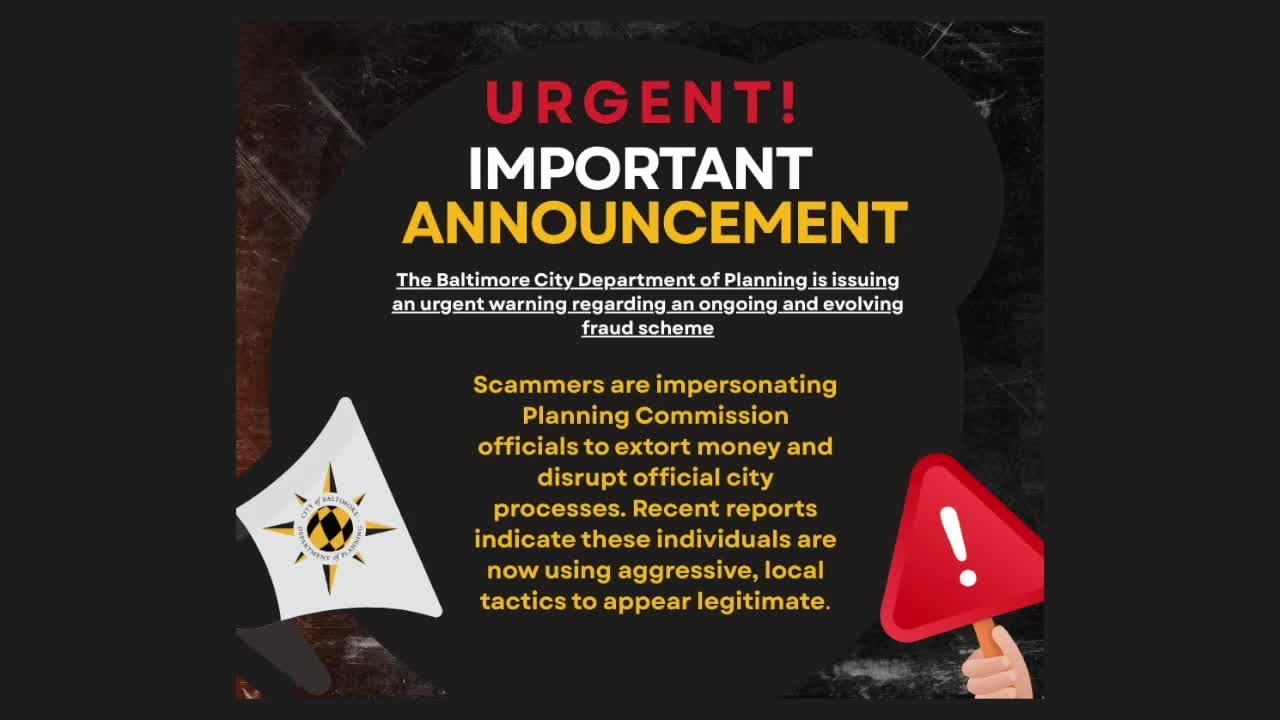
A nationwide scam is targeting people with open permit and zoning applications. The FBI is warning that fraudsters are posing as local officials and collecting thousands of dollars.
The emails look convincing. They include the property address, details about the project, and even reference the hearing. The email says you have been approved and need to pay a fee to finalize it. It is even signed with the name of a real official, but it is not coming from the city.
Eric Tiso, chief of land use and urban design for the Baltimore City Department of Planning, said they have been hearing about cases like this since last summer.
"And it was strange because our planning commission meetings are on Thursdays and the applicant who had been working with one of my teammates just didn't show up and we were wondering why they didn't come to the hearing. So the next day when he reached out and said, hey, sorry we had to postpone, are you okay, what was going on? They said, oh no, we were told that we were approved and we're like, uh oh, this is a problem," Tiso said.
The applicant had already sent $3,800. Then came another request for $2,800 in additional fees.
In one case, a public notice sign was removed after money was sent. Officials do not know if that is related or just a coincidence.
In another version of the scam, someone was told they could pay to get a spot on the planning commission.
"So the planning commission is an appointed position selected by the mayor and has to go through a public confirmation process through the city council so usually there are many discussions that happen. We're not going to be cold calling people for that. You will know if the mayor reaches out to you," Tiso said.
The city put out a warning back in January. In March, the FBI issued a nationwide alert. Frederick County also shared a scam email sent to one of their residents, who lost thousands of dollars.
And these fake payment requests are not random. They are specifically going to people who have open applications. Scammers are using publicly available information and hearing agendas to find applicants, telling them they have been approved, and then requesting thousands via wire transfer.
"We want people to be actively engaged in their community and development that's going on. So instead of going through us, to go directly to an applicant, having that information be available was historically valuable, but it might be something we're starting to look at changing," Tiso said.
Scammers are also counting on applicants not knowing how the process works.
"There might be a vulnerability there because they are not used to this, and so they might say, oh, this looks reasonable," Tiso said. "One [email] had an address that mapped to a random townhouse in East Baltimore, so if anybody would have just done a quick map search, they might have found this doesn't quite look right. But when in doubt, call us, we'll confirm."
The city will not ask you to wire money. Payment requests will come through their official system. Look closely at the email address, as these scams are often coming from non-government domains like "@usa.com."
Do not assume an email is real if you see the correct seal, logo, names of officials, or proper spelling and grammar. Call the planning office directly to confirm.
This story was reported on-air by a journalist and has been converted to this platform with the assistance of AI. Our editorial team verifies all reporting on all platforms for fairness and accuracy.