

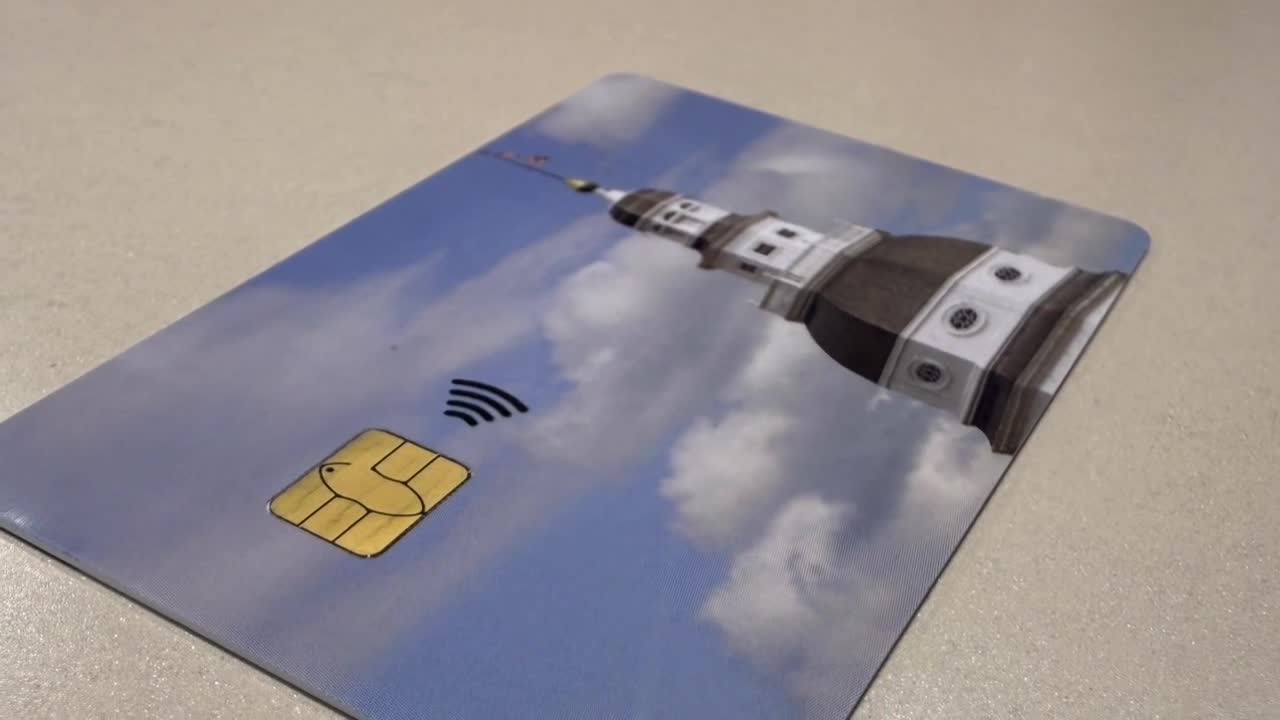


BALTIMORE — Maryland is rolling out chip-enabled EBT cards this month, a security upgrade years in the making that state officials believe could dramatically reduce the benefit theft that has cost recipients and taxpayers more than $51.7 million over the last three years.
WMAR-2 News' Mallory Sofastaii has been reporting on EBT theft since 2022, documenting how criminals cloned EBT cards and left Maryland families without money for groceries and rent.
In 2023, Maryland lawmakers passed legislation requiring the switch to chip-enabled cards after widespread card-skimming schemes allowed thieves to steal food and cash benefits, often emptying accounts within minutes of benefits being deposited.
The Maryland Department of Human Services says the new cards use the same EMV chip and tap technology bank customers have had for years, making them much harder to clone.
"This is a credit card, and as you can see we have that chip technology right there, something that has been industry standard for banking institutions for, I think, decades at this point. And now we finally get to have that same technology afforded to our cardholders," said JD Douglass-Robinson, the acting director for the Maryland Department of Human Services Office of Benefits Access.
"But the technology existed, so what were the other barriers — was it red tape? Was it funding?" asked Sofastaii.
"Not necessarily. Technological overhauls just take a lot of time," said Douglass-Robinson.
Before joining DHS, Douglass-Robinson pushed for the chip card law, and now he's helping to implement it.
"It's not as simple as turning on a switch and bam, we have new cards, right? It takes a matter of time, effort, and a lot of sweat and hours put in by so many people across so many departments and agencies," he said.
A contract dispute over who would manage Maryland's EBT program also delayed the rollout, and retailers needed time to upgrade payment systems to accept chip and tap transactions.
READ MORE: Maryland families still face EBT theft despite 2023 law requiring chip security
"Retailers had to make sure that they were not only just doing the mag stripe, but also the chip and tap technology that's on these cards now," Douglass-Robinson said.
Maryland now joins California, which began issuing chip-enabled EBT cards in 2025, and Alabama and Oklahoma, which launched statewide rollouts in 2026. Douglass-Robinson said those states are already seeing encouraging results.
"A conversation I had with the representatives at Alabama, they saw that their out-of-state transactions for New York alone dropped from something to the tune of a million dollars per month to $200,000 and then $20,000," said Douglass-Robinson. "We're not only going to protect our customers' benefits, we're going to protect state tax dollars as well."
What cardholders need to know
DHS says all current EBT cardholders should receive a new chip-enabled card by mail between July 13 and July 31. If you haven't received one by August 7, the agency says to contact EBT Vendor Services at 1-800-997-2222. Your benefit amount and current balance will transfer to the new card.
When your new card arrives, you should:
- Activate it immediately.
- Create a new PIN.
- Register for a new account through the ebtEDGE website or app to manage your card, freeze or unfreeze it, and receive account alerts. DHS cautions users to download the ebtEDGE app with the egg icon—not the similarly named "ebtEDGE NEW!" app.
Once you activate or use your new card, your old magnetic stripe card will automatically deactivate. If you don't activate it, DHS says the old card will stop working by September 30.
Even with the new cards, DHS says recipients should use the chip or tap feature whenever possible and swipe only as a last resort because skimming remains a threat. The 2023 law also continues to allow eligible victims of benefit theft to seek reimbursement.
DHS is also warning recipients to be on the lookout for scams during the transition. The agency says it will never call, text or email asking for your card number or PIN, and the official EBT website will not ask for that information on its first page.
This story was reported on-air by a journalist and has been converted to this platform with the assistance of AI. Our editorial team verifies all reporting on all platforms for fairness and accuracy.