

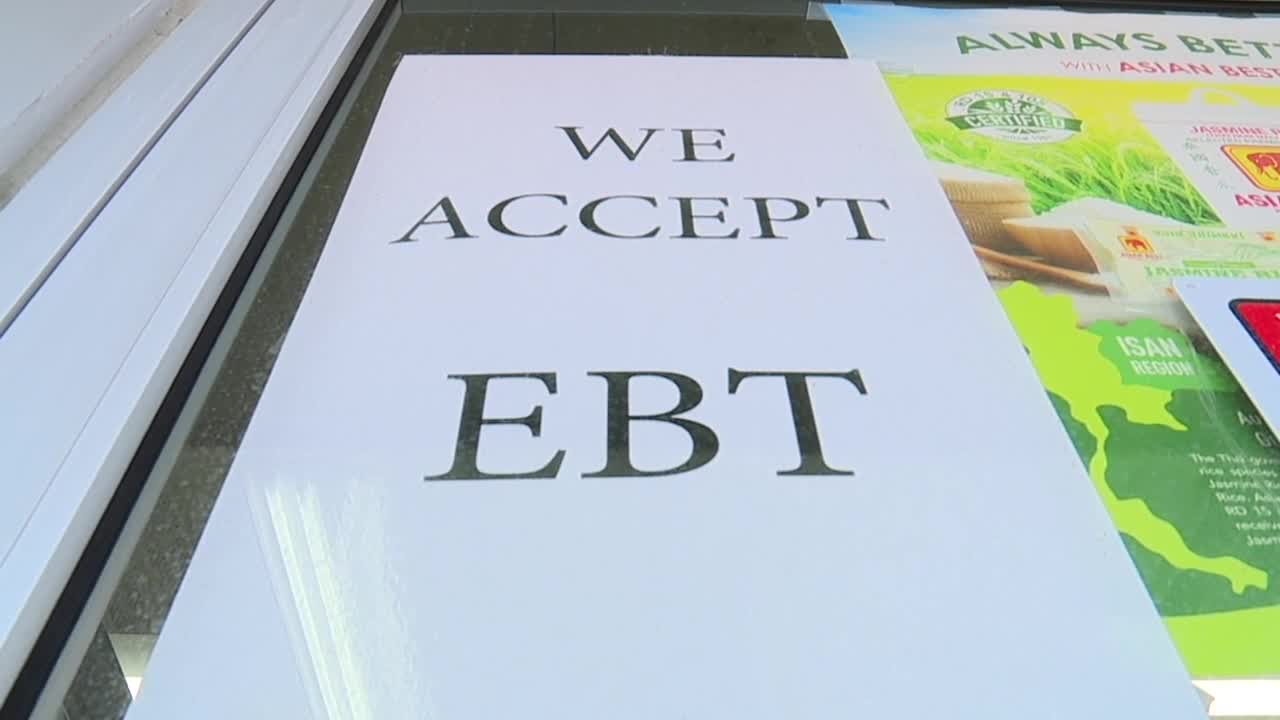


ANNAPOLIS, Md. — Maryland families receiving food and rent assistance say their benefits are being stolen almost as soon as the money is loaded onto their cards each month. The state has been working to add chip security to the cards, a process delayed by a legal dispute over a vendor contract, and officials say chip cards could begin rolling out in July.
Tiyonna, a Baltimore-area mother of two young children, said she doesn't trust her Temporary Cash Assistance to sit in her account. She receives about $900 a month to help pay rent, and she has had it stolen multiple times.
"Well, 12 o'clock is usually when it hits," Tiyonna said.
Rather than sleep, she goes to an ATM at midnight on the third of the month to withdraw her money the moment it is deposited.
"Not even 1 minute, 1 second. You've got to be there on time," Tiyonna said.
This is the fourth time benefits have been stolen from her. It also happened to her partner. Transaction records show a deposit landed at midnight, and by 2 a.m., the money was gone.
"They got us before we even got up. We should have got up at 12 like we normally do, but we got up this morning at 8 something," he told WMAR-2 News Mallory Sofastaii.
After discovering the theft, the couple went to a local Social Services office to try to file for reimbursement sooner. They said they saw dozens of other people there dealing with the same problem.
“It was a lot of people in there with the same frustration,” Tiyonna’s partner, who asked not to be identified, said. “They're working us like cattle, like they already know what to do for you if your stuff is scammed — reissue another card, tell you how to lock your card.”
Criminals are using skimmers and other methods to steal card information and drain benefits as soon as they hit accounts.
Lauren Molineaux, deputy executive director of the Family Investment Administration at the Maryland Department of Human Services, acknowledged the toll the theft takes on families.
"We don't want those things to happen to our customers," she said.
The department has added some security features, including the ability for users to lock their cards or change their PIN. However, one major protection that most bank and credit card users already have, a microchip, is still lacking on EBT cards.
Nearly three years ago, state lawmakers passed a law requiring the Department of Human Services to add chip security to the cards. State Senator Katie Fry Hester sponsored the emergency legislation, which also required the state to reimburse stolen benefits.
"When the financial industry transitioned, they saw a 70 percent reduction in crime, which is why I pushed so hard for this happen," Hester said.
With only two vendors in the country providing the service, a lawsuit over the contract award delayed implementation.
"The procurement took a really long time. If you look at once the procurement issue was settled and we actually had a contract, we only started that transition really in October 2025 so it got bogged down in the courts," Hester said.
The delay has come at a significant cost. Since March 2023, the state has replaced more than $48 million in stolen benefits. Nearly half of that has come from state funds, even as lawmakers face another budget shortfall.
"I'm disappointed it's taken this long but we are going to be the second in the nation to get this done," Hester said.
California was the first state in the nation to implement chip cards for EBT, starting early last year.
The department says it is still on track to begin issuing chip cards in July. But before that can happen, local stores and ATMs must be updated to accept them.
"Just because a regular chip card is accepted, does not automatically mean EBT chip cards can be accepted," Molineaux said. "So, we're trying to, you know, thread that needle in making sure our customers are protected, not rush implementation, but also recognize the fiscal impacts tied to all of the actions."
Molineaux said the department has not seen a spike in theft reports in the last 24-48 hours, however, a spokesperson for the U.S. Secret Service said it's aware of a reported uptick of EBT fraud and card skimming in the Baltimore area and is working closely with local law enforcement and private industry partners to combat card skimming. Last fall, WMAR-2 News joined agents during a sweep in the Baltimore area where they confiscated 22 devices, preventing an estimated $22 million in potential losses.
Click here for information on how to get reimbursed for stolen benefits.
This story was reported on-air by a journalist and has been converted to this platform with the assistance of AI. Our editorial team verifies all reporting on all platforms for fairness and accuracy.