

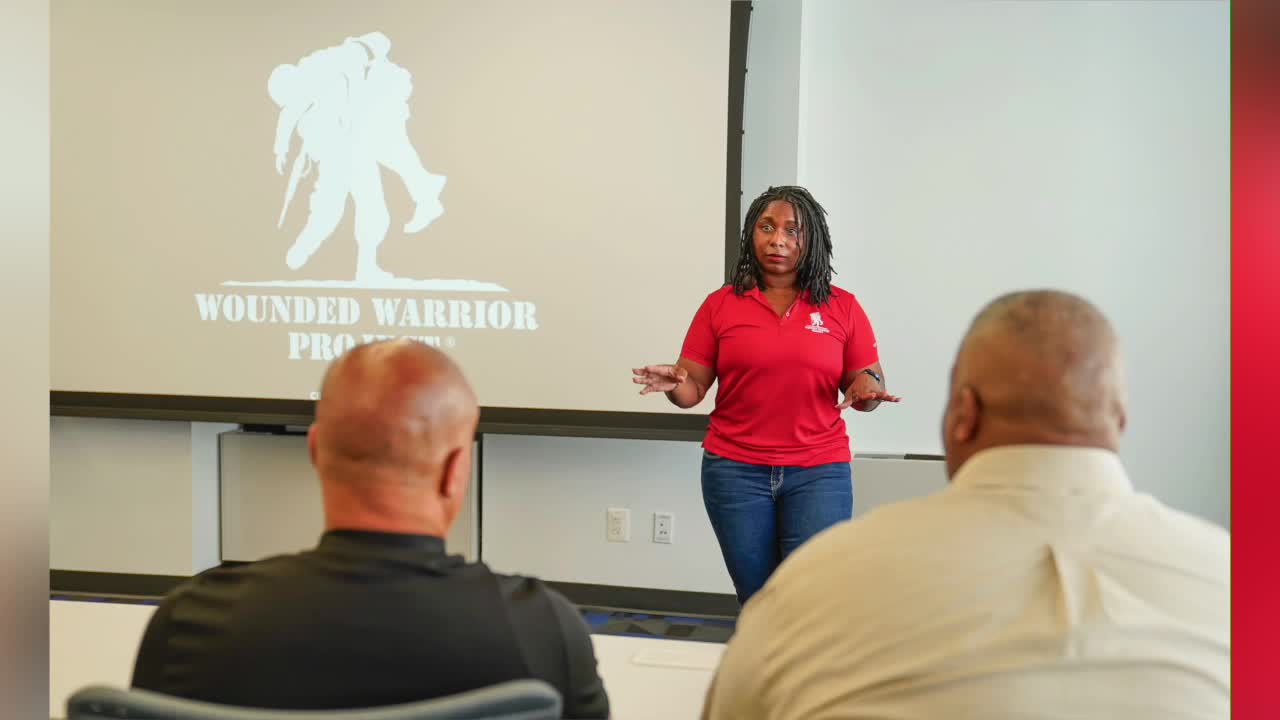


BEL AIR — For Army veteran Chanté Franco, Suicide Prevention Month is about more than awareness. It is about having conversations that can save lives.
Franco grew up in a military family and says she always knew she wanted to serve. She eventually spent eight years in the U.S. Army and Army Reserve.
“I knew I always wanted to serve,” Franco said. “I decided that I wanted to be in the military because I just saw how much pride my dad had.”
But early in her military career, Franco says that sense of trust was shattered.
While stationed in South Korea in 2005, Franco says she experienced a series of military sexual traumas involving members of leadership. She says she initially blamed herself and struggled to speak about what had happened.
Franco says she also did not understand that the trauma she experienced could result in post-traumatic stress disorder.
“I didn’t even know that I had PTSD,” Franco said. “I thought you only got it if you went to war.”
She says the trauma began affecting her behavior and mental health while she was still serving.
“I didn’t know how to cope,” Franco said, describing a period that included self-harm and eventually a suicide attempt.
Franco says one suicide attempt happened while she was on active duty. Another came after she left the military. For years, she tried therapy on and off but says shame kept her from fully explaining what she was experiencing.
That began to change years later during an examination for veterans benefits.
Franco says a provider asked her directly whether she was considering suicide. The question forced her to acknowledge thoughts she had been struggling to discuss.
“The fact that she asked me directly was jarring enough that I couldn’t lie,” Franco said. “It was almost as if she gave me permission to say it.”
That conversation helped connect her with mental health treatment.
Today, Franco says she continues trauma therapy through the Department of Veterans Affairs and serves as a co-leader of a Wounded Warrior Project peer support group in Baltimore.
She says those experiences have shown her how important community can be for service members and veterans struggling with their mental health.
“Suicide prevention to me looks like a group of people who just randomly text each other,” Franco said, “and then who calls each other out when they see that there’s something wrong.”
Franco says people sometimes hesitate to ask someone about suicide because they are afraid of saying the wrong thing or believe they will become responsible for solving the problem.
Her advice is simple: You do not have to fix everything. But you should not be afraid to ask.
“You are not going to give them the idea of committing suicide by asking them if they’re committing suicide,” Franco said. “If anything, you’re actually giving them permission to talk about it and you’re opening the door for them to then receive help.”
Franco now hopes that telling the parts of her story she once struggled to say out loud will help other veterans and service members feel less alone.
She says she has reached a point where she no longer takes ownership of what happened to her, but instead takes ownership of the growth that followed.
And if telling her story reaches even one person, Franco says it is worth it.
“I’m OK with sharing my story when I know that it may save one person.”
If you or someone you know is experiencing a mental health crisis or considering suicide, call or text 988. Veterans and service members can call 988 and press 1 to connect with the Veterans Crisis Line.
