



Technical discussions between the U.S. and Iran are expected to continue this week in Switzerland.
Vice President JD Vance says the high level talks laid a “good foundation” but said it's also clear there’s more work to do.
The parties agreed on a roadmap in efforts to reach a final agreement, according to mediators.
Vance says Iran agreed to invite International Atomic Energy Agency inspectors into the country, though Iranian officials at last check have not publicly confirmed that.
RELATED STORY | US and Iran begin nuclear negotiations with both sides reporting progress after opening talks
President Donald Trump wrote on social media “Everybody is fully aware that Iran will agree to have major weapons inspections in order to ensure 'Nuclear Honesty' long into the future."
"We're obviously going to bolster those inspections, that inspection regime, to make sure they can never have a nuclear weapon," Vance said.
Vance also said in a "classic Trump deal," the U.S. and Qatar will have approval over the process of unfreezing Iranian assets used to purchase American agriculture, but only with progress toward American objectives.
"And we actually asked the Qataris to help us set up the mechanisms so that we can ensure that the money goes where we want it to go. And they agreed to do that," Vance said. "But fundamentally, that money is not going to be unfrozen unless we continue to see progress."
The parties also focused on deconfliction mechanisms for the Strait of Hormuz and Lebanon.
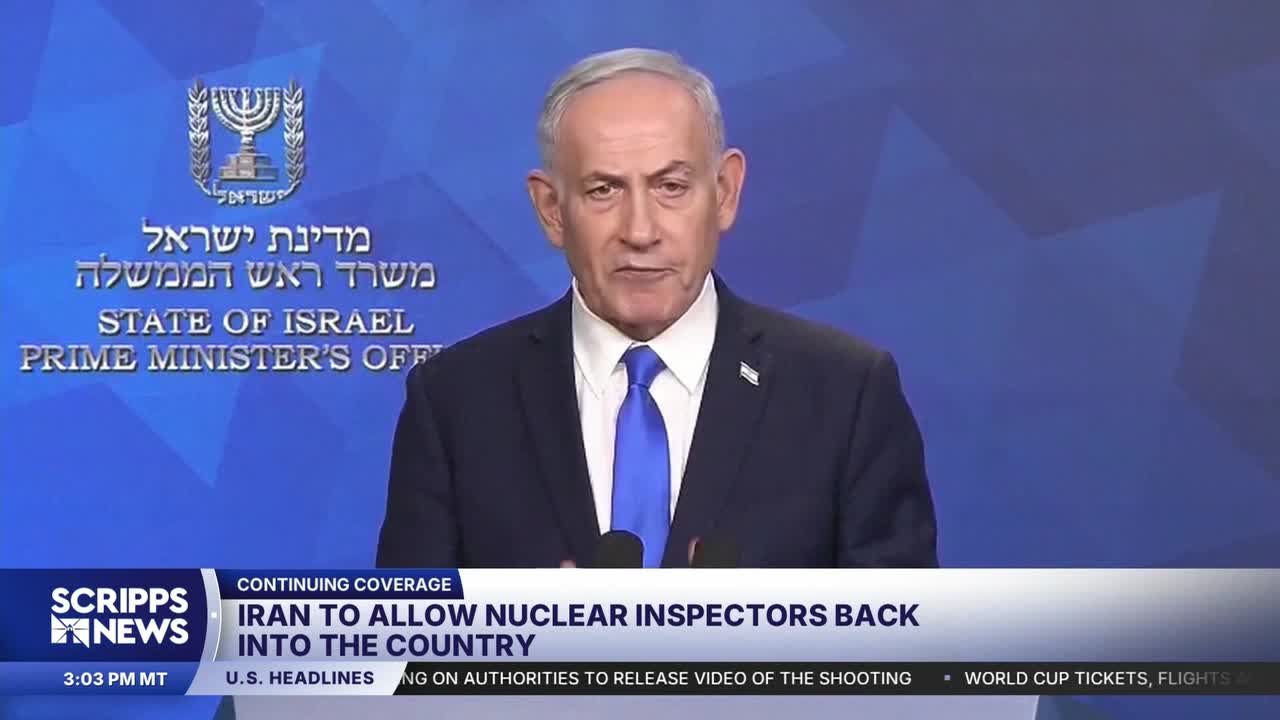
Meanwhile, Israel and Lebanon are expected to have another round of talks in Washington. But Israeli Prime Minister Benjamin Netanyahu is holding firm on forces in southern Lebanon over concerns of Hezbollah threats.
"Right now, over the next few days in D.C., the severe damage actually inflicted on Hezbollah has created a new reality in Lebanon, and that has opened a window for this potential historic agreement," Israeli spokesperson David Mencer said.
In the backdrop, the U.S. issued a 60-day sanctions waiver on the sale of Iranian oil as traffic increased through the Strait of Hormuz.
The U.S. technical team attending the negotiations includes members from the Departments of State, Treasury, Energy and the Pentagon, according to a U.S. official.
Secretary of State Marco Rubio is also expected to make a swing through the UAE, Kuwait and Bahrain to discuss in part the memorandum of understanding and the Strait of Hormuz, according to a spokesperson.
RELATED STORY | Iran closes Strait of Hormuz again, stalls Switzerland talks with US
