



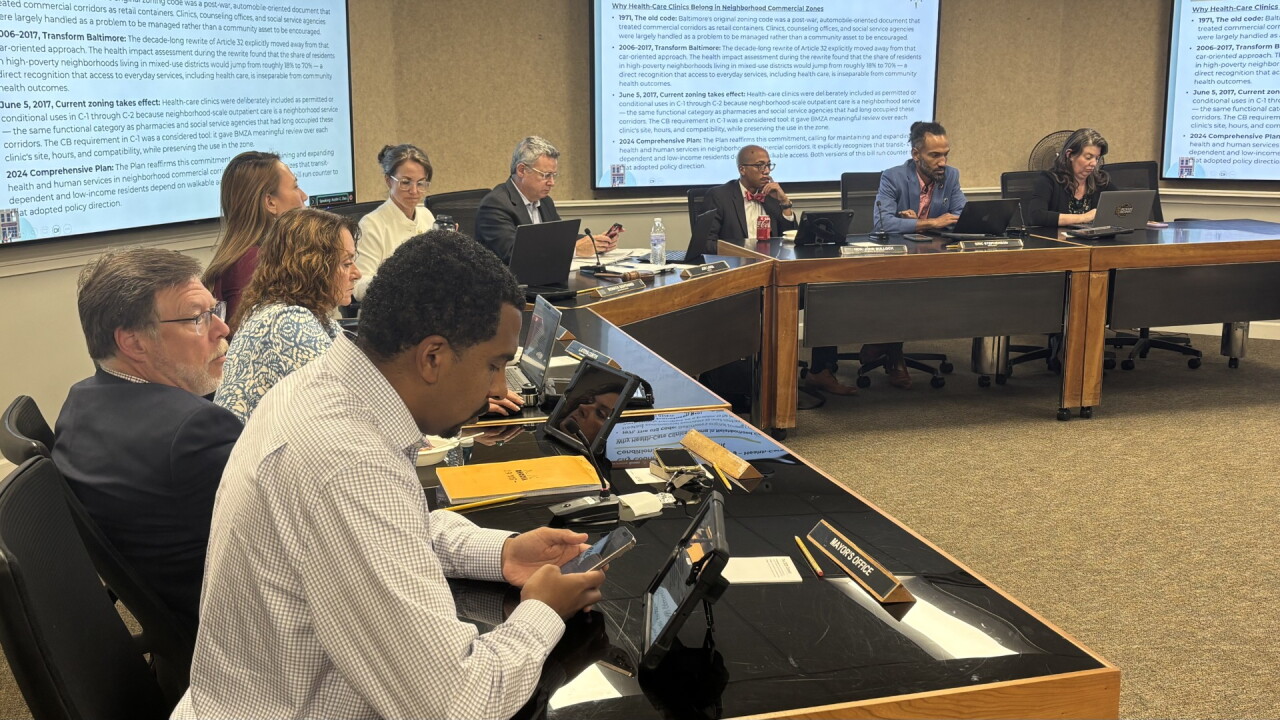
BALTIMORE, Md. — The debate over how Baltimore City should regulate data centers drew a packed crowd to a Baltimore Planning Commission meeting Thursday.

Debate over data centers returns to Baltimore City as neighbors oppose legislation
On the table is a proposal, sponsored by City Councilmember Phylicia Porter, that would require data center projects to go through a conditional use approval process that includes a health equity assessment, public input, and a vote by the Baltimore City Council.
"Bill 26-0174 establishes the framework of what should come next: conditional use by ordinance, health equity review, public participation, and accountable decision-making," Porter told the commission.
The bill got a lot of social media attention and drew dozens of residents to Thursday's meeting, concerned about the future of data center development in Baltimore.
Baltimore currently has a moratorium on new data center development while a city study examines the potential impacts of the facilities, due by March 2027.
While critics argued the legislation is premature, Porter said the bill is intended to strengthen existing protections and create a framework for reviewing projects once the moratorium ends.
"Bill 26-0174 does not greenlight data centers; it strategically and administratively blocks development at every step of the way that does not align with the community," Porter said. "The moratorium is not public policy; that means we are fully unprotected at this point."
She worries that the moratorium could be challenged by the federal government, leaving the city vulnerable without legislation in place.
Members of the planning commission did not share these concerns, and neighbors pushed for them to have the time to complete the study.
"I think we should be allowing the planning board to have the time to have the study, to really think this through because I think we can see how upset everyone is at even the mere thought of a data center coming to Baltimore," neighbor Hillary Gonzalez said.
Though opinions differed on the legislation itself, many speakers shared a common goal: limiting or preventing future data center development in Baltimore.
At the conclusion of the meeting, the Planning Commission declined to support the bill. Commissioners did, however, agree with Porter's recommendation that a health equity assessment should be included in the current study of data centers.
"The data center industry and the AI development we're seeing across the nation is not going to stop," Porter said. "I look to continue the fight to make sure my communities are well served and protected."
The legislation will now move to the Baltimore City Council for consideration in September.

