



ANNAPOLIS, Md. — The Maryland Comptroller's Office says it does not have enough staff to answer taxpayer calls, a shortage that comes as reported call volume has increased and the agency prepares to launch the biggest overhaul of Maryland's tax system in more than 30 years.
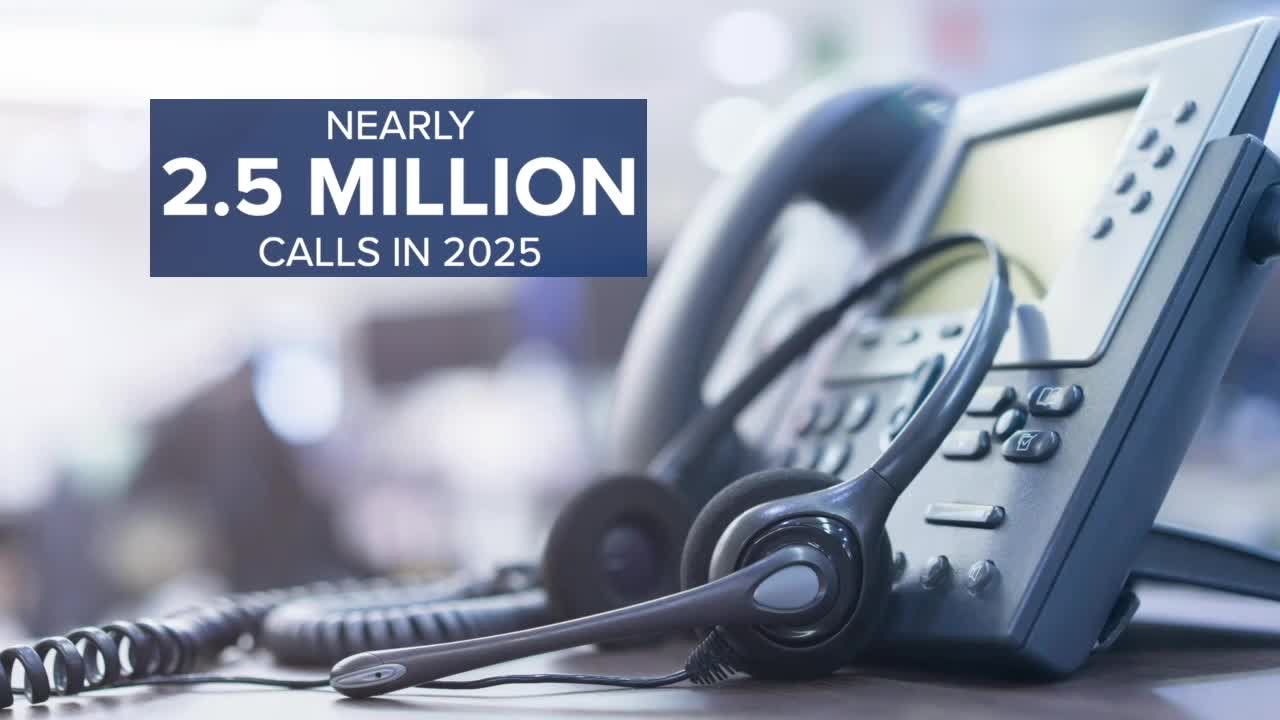
According to reports from the Maryland Office of the Taxpayer Advocate, the number of call-agent positions fell from about 75 in 2022 to 57 as of January 2026. During that same period, reported call volume increased from roughly 1.1 million to nearly 2.5 million calls, though the agency notes changes in its phone system affected how calls were counted. A separate analysis by the Department of Legislative Services found average taxpayer hold times reached their highest level in more than a decade.
Gerard Willie is among the taxpayers who say they've struggled to get answers from the Comptroller's Office. He's spent years trying to recover the remainder of a refund tied to his 2021 tax return.
"It goes to a voicemail, a message service, and that's really where it has stopped," Willie said.
After receiving an email asking him to prove he was a Maryland resident, Willie says he mailed the requested documentation by certified mail in 2023 and waited for a response.
"And how long have you lived in Maryland?" asked WMAR-2 News Mallory Sofastaii.
"Since 1955," Willie replied.
It wasn't until recently, when he contacted Senator J.B. Jennings (District 7, Baltimore/Harford Counties), that he saw movement on the case.
"Finally received my refund. Six years later," Willie said. "For $3,800 dollars."
"You never want to hear that on any state agency. It's frustrating. People want to talk to people, a live person," Jennings said.
He added that his office has heard from multiple constituents struggling to get answers from the Comptroller's Office.
"They have nobody else to turn to, they just keep calling and calling," Jennings said. "That's when people lose trust in government and it's something we need to address."
Comptroller Brooke Lierman acknowledges there is a problem.
"They can't even leave a message," Sofastaii noted.
"We can't because it'd mean we'd have to check thousands of messages and then we wouldn't be answering people's calls," Lierman said.
According to the Comptroller's Office, callers hear the automated message when 100 people are already waiting in the queue.
"We do not have enough staff in our call center right now," Lierman said.
Lierman said state human resources changes played a major role.
"We lost a huge number of positions as contractors to employees were being changed. In addition, we lost the ability to hire temps for tax season," Lierman said.
Despite the staffing challenges, the office processes more than 3.2 million individual tax returns annually, with an average turnaround time of about three days. And Lierman said relief is on the way with lawmakers approving agency requests to add more staff.
"They gave us 25 new positions in the FY 27 budget. So starting July 1st we'll be able to hire those positions," Lierman said.
The state also approved $2.9 million in one-time funding for approximately 30 contracted call-center agents to support the rollout of Maryland Tax Connect, a new online tax portal scheduled to launch for individual taxpayers on Sept. 1.
The launch marks the first system-wide modernization of Maryland's tax infrastructure in more than three decades. The new portal is expected to give taxpayers more self-service options, including the ability to view account balances, upload documents, establish payment plans and communicate directly with the agency online.
Lierman said the long-term goal is to reduce the need for taxpayers to call in the first place.
"Yes, we will continue to advocate to put more people on the phones because I know some people want to talk to a human," Lierman said.
For taxpayers who need help now, the Comptroller's Office recommends using its myCOMconnect portal to upload documents, open a case and communicate directly with staff. Officials say having a case number can also help speed up the process if taxpayers later need to call.
Taxpayers with complex or longstanding issues that have not been resolved through normal channels may also be able to seek assistance through the Office of the Taxpayer Advocate.
This story was reported on-air by a journalist and has been converted to this platform with the assistance of AI. Our editorial team verifies all reporting on all platforms for fairness and accuracy.