



BALTIMORE — Many Meta users say they were locked out of their Instagram or Facebook accounts after being accused of violating the company's policies on child sexual exploitation, allegations they strongly deny.
An independent oversight board is now urging Meta to make its account enforcement process more transparent and provide users with a fairer appeals process.
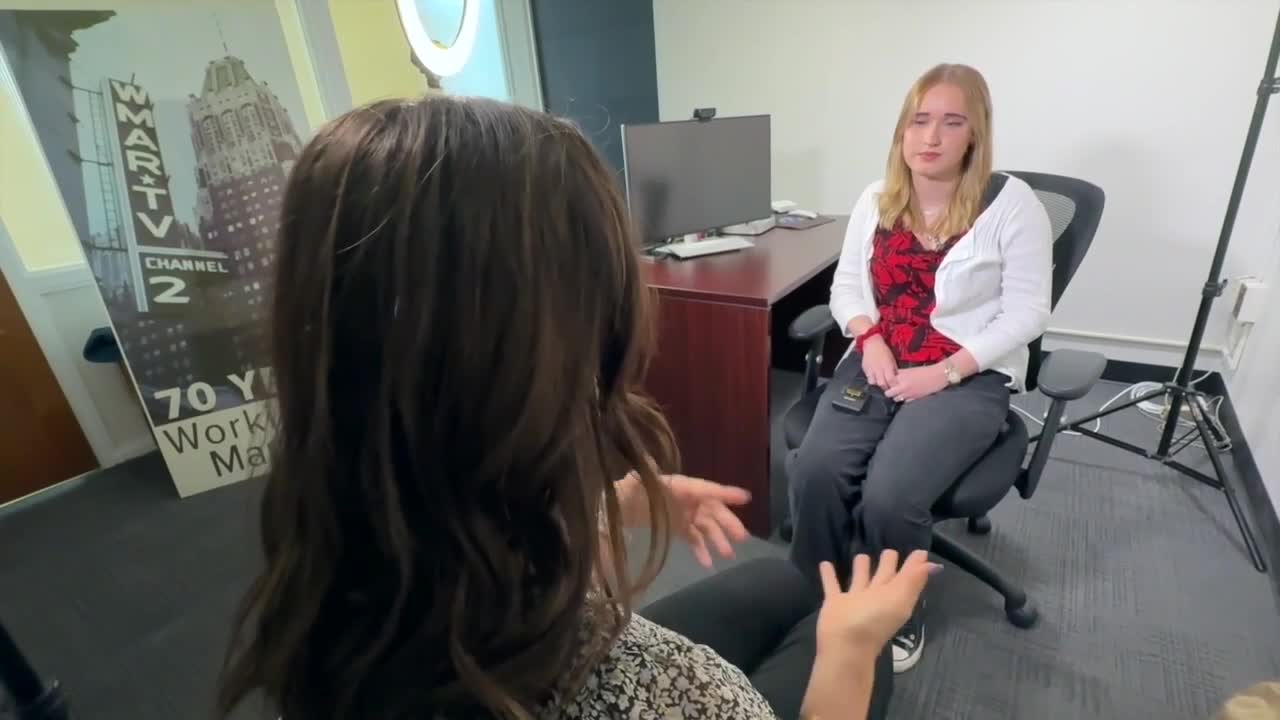
Amy Kline, a private tutor, and Mackenzie Blake, a college student, were among those whose Instagram accounts were disabled.
"Child violations or exploitation, something like that," Kline said.
Blake said the accusation was especially upsetting because of her work.
"I also work at a preschool occasionally, so I think that was disgusting that they would accuse me of that," Blake said.
When both women asked Meta what they had done wrong, they say they never received a clear explanation.
"They said they couldn't tell me due to privacy and security reasons, which I think is ridiculous because it's my account," Blake said.
Kline described the experience as unsettling.
"You know, I was basically being accused of something that's pretty intense and horrific, and they wouldn't even really tell me what it was, so I didn't know," Kline said.
When asked how she would rate Meta's customer service, Kline didn't hesitate.
"Zero. There is no one to contact," she said.
Both women eventually regained access to their accounts after WMAR-2 News contacted Meta. Meta did not respond to WMAR-2 News' requests for comment.
READ MORE: ‘Disgusting and false’: Meta flags Maryland student’s Instagram for child exploitation
Their experiences are part of a broader wave of complaints. More than 65,000 people have signed an online petition calling for greater accountability when social media platforms disable user accounts.
The issue has also reached the Meta Oversight Board, an independent panel funded by Meta that reviews certain content decisions and recommends changes to company policy.
"There are a lot of desperate people out there who are incredibly frustrated that their accounts have been shut down," said Suzanne Nossel, a member of the Meta Oversight Board. "In some cases, their account is their livelihood. They're running a small business on Meta platforms, or it's their social lifeline. They're disabled or isolated."
The board recently reviewed its first account disablement case after years of requesting authority to examine account removals.
"We just were finally, after years of urging Meta to give us that expanded jurisdiction, we finally were able to do a pilot case where we looked at an account takedown," Nossel said.
In that case, the board agreed Meta was justified in permanently disabling the user's account because it contained severe threats of violence.
But the board stressed that the decision should not be viewed as an endorsement of Meta's broader account enforcement system. In its report, the board said it has "due process concerns relating to how Meta disables user accounts" and warned that many users are left without meaningful explanations or a clear path to appeal.
The report also notes the board received more than 750 public comments on the case and has heard "innumerable complaints" from people who say they were unable to understand why their accounts were disabled or how to get them back.
Nossel said the board wants Meta to make the process significantly more transparent and provided a series of proposals.
"For how to make that process more fair, offer better due process to users, make it more transparent, what the rules are, why accounts get taken down, how you can appeal and know the status of your claim," she said.
Among the board's recommendations: Meta should clearly explain which rule a user violated, what penalty was imposed, whether automated systems played a role in the decision, and allow users to track the status of their appeals.
Meta has not yet formally responded to the board's recommendations. Under the board's process, the company has 60 days to issue a public response explaining whether it will implement them. Click here to see the board's full report.
On its Account Recovery website, Meta says it has updated its AI-powered recovery process across Facebook and Instagram to provide faster, more consistent appeals and recovery experiences.
If your account is disabled, experts recommend starting with Meta's Account Recovery Hub at meta.com/account-recovery-support. Users can also submit certain cases to the Meta Oversight Board, though the board currently reviews only a limited number of account disablement cases.
Consumer advocates also warn users to be wary of anyone promising to restore a disabled account for a fee, as those offers are often recovery scams.
This story was reported on-air by a journalist and has been converted to this platform with the assistance of AI. Our editorial team verifies all reporting on all platforms for fairness and accuracy.