



BALTIMORE — Maryland drivers pay registration fees based on their vehicle’s manufacturer’s shipping weight, with heavier vehicles paying more.
Now, a second Maryland driver is getting money back after discovering the weight used to classify her vehicle did not match the manufacturer’s records.
The case follows our initial Matter for Mallory investigation into a driver who questioned why her vehicle had moved into a higher weight class. The Maryland Motor Vehicle Administration ultimately corrected her record and refunded her $82.
Since that report aired, several other drivers have contacted WMAR-2 News after taking a closer look at their own registrations.
Alice Hatcher was one of them.
“I saw your reel on Instagram about the issue and I went and checked my weight for my car because it wasn't something I ever thought about before and it was definitely incorrect,” Hatcher said.
READ MORE: Maryland driver questioned her registration fee and ended up getting a refund
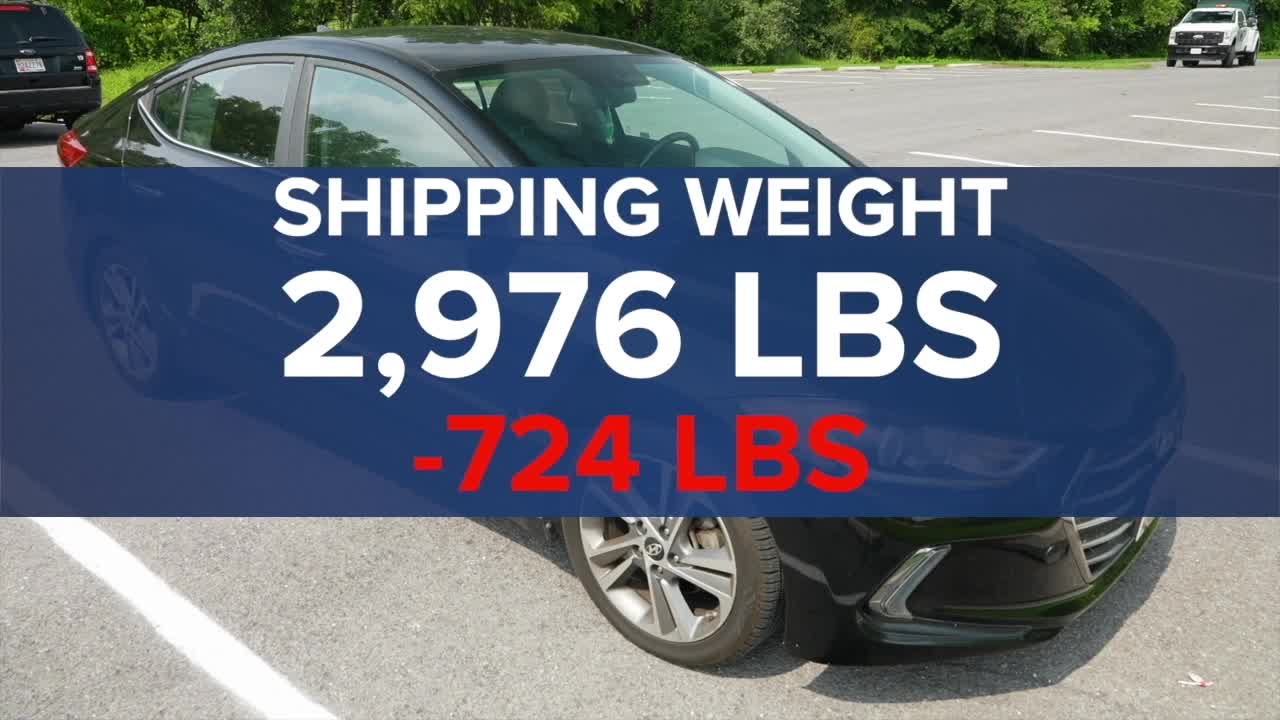
Hatcher drives a Hyundai Elantra Limited. Her Maryland registration placed the vehicle in the state’s highest passenger vehicle weight class of more than 3,700 pounds. Her title listed it that way, too.
“I don't know how they got that number to begin with because I don't think I gave it to them when I became registered here,” Hatcher said.
Hatcher previously lived in California, where passenger vehicle registration fees are based primarily on a vehicle’s value rather than the manufacturer’s shipping weight used in Maryland.
“So it wasn't something I ever had to know before,” she said.
WMAR-2 News Mallory Sofastaii provided Hatcher’s VIN to Hyundai Motor America, which researched the vehicle’s original Manufacturer’s Statement of Origin and confirmed its shipping weight is 2,976 pounds. That's 700 pounds less than the weight class reflected on Hatcher’s Maryland records and enough to reduce her annual registration fee by $71.
**Are you impacted by this? We want to hear from you. Email Mallory@wmar.com or fill out this form.**
“I wanted my money back,” Hatcher said. "I was working in government contracting and I lost my job, so I really need to save as much money as I can right now until I get another job."
The MVA has since reviewed Hatcher’s case and says it has processed a $71 refund check.
Where did the weight come from?
In 2024, Maryland expanded its passenger vehicle registration system from two weight classes to three. As part of that change, the MVA ran registered vehicles through VINtelligence, a vehicle-data platform operated by Mobility Global, to update weight information.
"We did want to make sure we had as up to date and accurate information as possible and so we put all vehicles through that system," MVA Administrator Chrissy Nizer told WMAR-2 News in July.
But Hatcher's vehicle had been listed at more than 3,700 pounds even before that statewide update.
"The original weight was pulled from VINtelligence when the vehicle was titled in 2022," an MVA spokesperson said. "The vehicle was also listed at over 3700 pounds during implementation of new weight classifications in 2024."
That leaves a key question: Where did the original weight come from?
Hyundai told WMAR-2 News its shipping-weight data originates with Hyundai Motor America's Product Planning information and is incorporated into the Manufacturer's Statement of Origin provided to the dealer.
We asked Mobility Global where VINtelligence gets its vehicle weight data and whether the shipping-weight information it provides comes directly from manufacturers.
The company did not directly answer those questions, but said it is reviewing Hatcher's case with the MVA.
"Our team is actively working with the MVA to address the customer inquiry and to review the relevant processes and data associated with them," a Mobility Global spokesperson said. "We are committed to providing accurate information to the automotive industry and will continue to work closely with the MVA."
The MVA said it cannot explain how VINtelligence assigns vehicle weights because the software is maintained by Mobility Global.
How can drivers verify their vehicle's shipping weight?
The discrepancy raises another issue: Even if drivers check the weight class on their registration, determining whether it's accurate can be difficult.
The MVA says the most reliable source is the Manufacturer's Certificate of Origin, also known as a Manufacturer's Statement of Origin. The document is created for a new vehicle and used in the initial titling process, but it is not something most drivers have readily available.
"The most reliable source of vehicle shipping weight is the manufacturer's certificate of origin," the MVA told WMAR-2 News. "Some vehicles will show shipping weight on the doorjamb sticker or in the owner's manual, but it's inconsistent across vehicle models and manufacturers."
Hyundai said the shipping weight is not listed on its vehicles' doorjamb certification labels. Those labels instead show the Gross Vehicle Weight Rating, or GVWR, which is a different measurement. The company also said its Product Guides containing shipping-weight information are intended for internal and partner use and are not publicly available.
If drivers cannot confirm the shipping weight through the certificate of origin or information from the manufacturer, the MVA recommends using a third-party source.
"If owners have a question about the accuracy of the weight reflected on their registration, they should inquire with MVA to determine the reason for the difference, and have it corrected if appropriate," the agency said.
The MVA says it does not have data suggesting incorrect vehicle weights are a widespread problem. It encourages drivers who believe there may be an error to contact the agency so it can review their records and issue refunds when appropriate.
For Hatcher, the experience reinforced the value of checking.
"I find that I'm asking for refunds a lot now, more than I have in the past just because of simple mistakes, or intentional mistakes, I really don't know," she said.
Are you impacted by this? Check the weight class listed on your Maryland registration and compare it to your title and previous registrations. If something doesn't look right, contact the MVA and ask it to verify the manufacturer's shipping weight used to classify your vehicle. You can also share your experience with Mallory by emailing Mallory@wmar.com or filling out our form.
This story was reported on-air by a journalist and has been converted to this platform with the assistance of AI. Our editorial team verifies all reporting on all platforms for fairness and accuracy.