



Today's question of the day, "How do clouds form?". Let's talk about the science behind how clouds develop!
The sun heats the Earth’s surface, causing water to evaporate and rise into the air as water vapor. Because warm air is less dense than cold air, it rises—a process known as convection.

As this air rises higher into the atmosphere, the surrounding pressure decreases, causing the air to cool. When it cools enough, the water vapor condenses into tiny liquid droplets. This process is called condensation. These droplets attach to microscopic particles in the air, such as dust, salt, or pollution. These particles, known as cloud condensation nuclei, help the droplets gather and grow. As more droplets form and combine, they become visible as clouds.

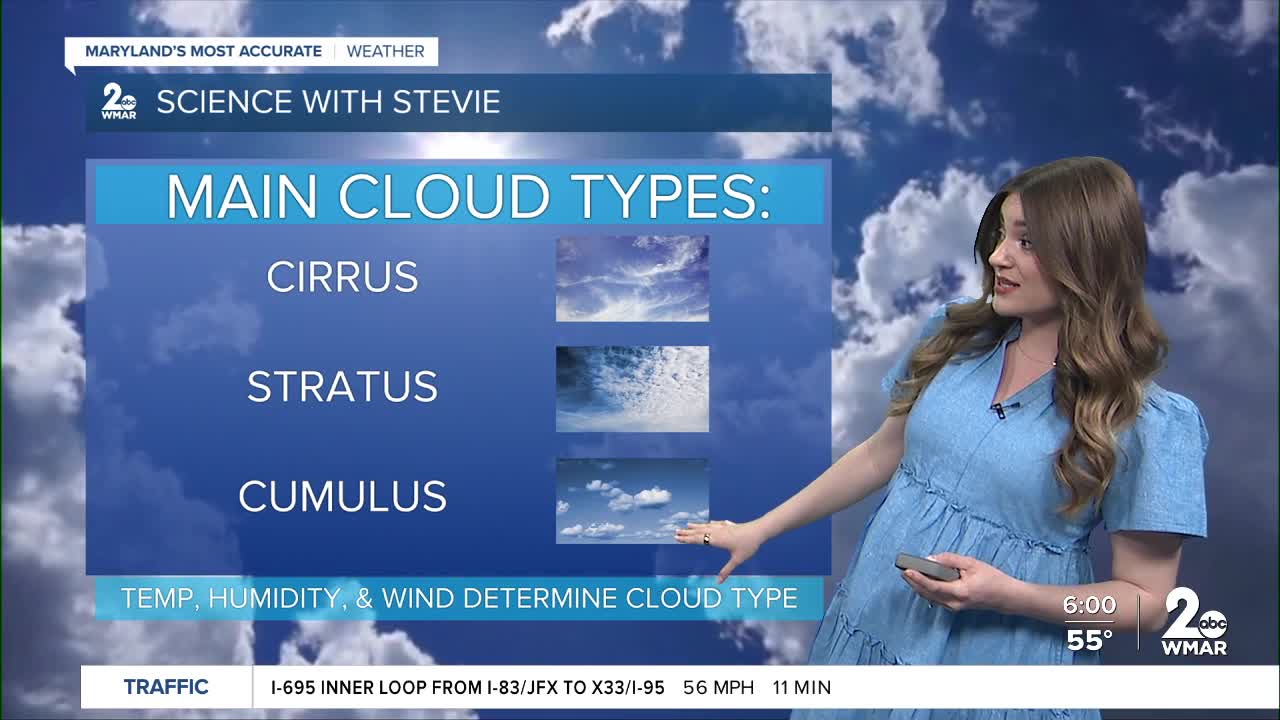
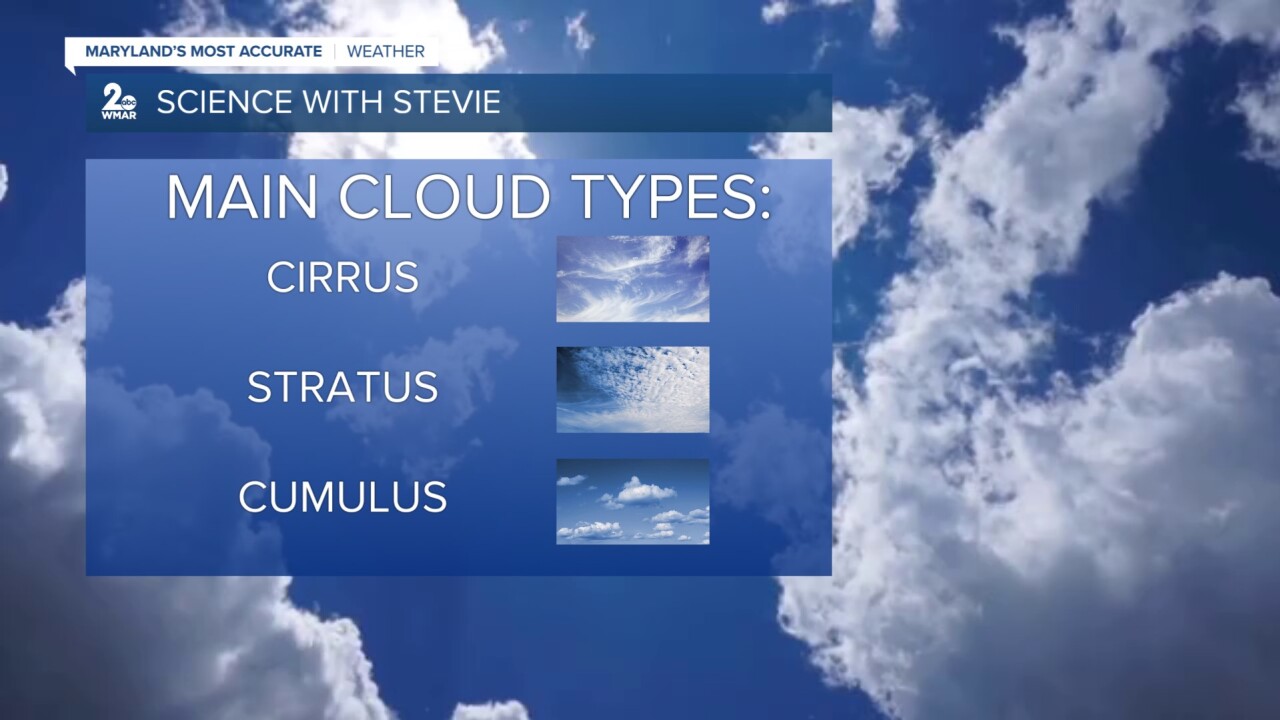
The type of cloud that forms depends on factors like temperature, humidity, and wind. The three main types of clouds are cirrus, stratus, and cumulus.
If you have a weather question, feel free to send me an email or reach out to me on social media!
#StevieDanielsWX #SciencewithStevie
Email: stevie.daniels@wmar.com
Facebook: www.facebook.com/StevieDanielsWX
X: www.twitter.com/StevieDanielsWX
Instagram & TikTok: stevie_daniels_

