

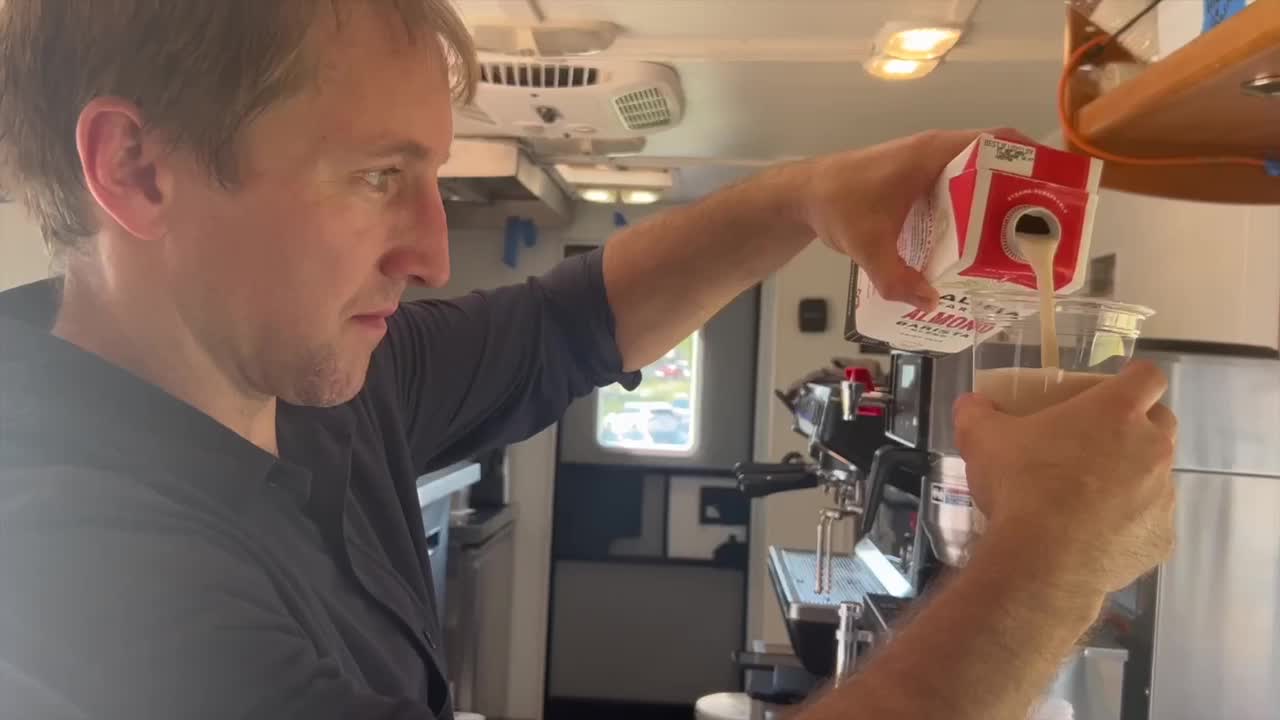


ANNAPOLIS — A cup of cold brew may seem far removed from a conversation about veteran suicide prevention.
For Navy officer Jordan Foley, the two are connected by a mission born from the loss of a friend.
Foley, a U.S. Naval Academy graduate and active-duty Navy lieutenant commander, founded Let’s Chow in 2020 after a close friend and fellow Naval Academy classmate died by suicide while trying to build his own business.
Foley said his friend had been working to launch a food delivery service for military bases but struggled to raise money, fell into debt and battled depression.
“My thought was immediately, well, what could I have done more,” Foley said.
That question stayed with him.
“I can't ever go back in time and fix that and help him when I didn't,” Foley said. “I didn't know he was struggling. I didn't see the signs.”
Instead of creating another broad veteran entrepreneurship program, Foley decided to focus on one industry: food. That idea became Let’s Chow, a business incubator that helps veterans build culinary businesses through food trucks, mentorship and hands-on support.
In 2024, Let’s Chow became the Robert Irvine Foundation’s official food truck program, expanding its ability to help veterans and military spouses transition into entrepreneurship.
One of the veterans benefiting from that mission is former Navy SEAL officer Stephen Meidus, co-owner of Voyager Cold Brew.
Meidus said the coffee company started as a small project with his brother and best friend. All three attended the Naval Academy and were serving on active duty when they started selling cold brew at farmers markets.
“I never thought I'd own a business,” Meidus said. “I didn't grow up in a, like an entrepreneurial family, so it was all new to me. I was just learning as I was going.”
As Meidus prepared to leave the Navy, an opportunity emerged at the same place his military career began. The U.S. Naval Academy was looking for a new nitro cold brew supplier.
At the time, Meidus said Voyager was producing roughly 10 to 15 gallons a month for farmers markets and small businesses around Virginia Beach.
He landed a tasting at the Naval Academy on Feb. 29 — the final day of his military service.
About 100 midshipmen sampled the cold brew, according to Meidus. Their reviews were strong enough that he was asked whether Voyager could produce about 300 gallons a week.
Even though he was making only a fraction of the amount at the time, Meidus said yes.
He then had four months to figure out how to make it happen.
“And we did,” he said.
The new contract helped grow Voyager’s wholesale business, but Meidus still lacked something that could put the Voyager name directly in front of customers.
Then his brother mentioned an old Naval Academy football teammate: Jordan Foley.
Meidus called him, and a few months later, a food truck arrived in Virginia Beach.
Let’s Chow helped fund the truck and equipment, giving Voyager a mobile retail location and a way to build its own brand instead of only selling its coffee through other businesses.
“I mean, none of it would have been possible,” Meidus said. “We didn't have the financial backing to, uh, grow this idea, so it would have just died in the water.”
Today, Voyager Cold Brew has expanded its reach into the Annapolis area, including at the U.S. Naval Academy. Meidus also said customers can find its cold brew on tap at Naval Bagels locations in Annapolis and Edgewater.
Foley said Let’s Chow’s work goes far beyond simply handing a veteran the keys to a truck.
Veterans leaving military service can face startup costs, difficulty securing business loans, family responsibilities and the challenge of moving from the structure of military life into the uncertainty of entrepreneurship.
Let’s Chow connects them with people who can help with marketing, accounting, menus, sourcing and other parts of building a culinary business.
“We create a family and an ecosystem for the veteran to overcome obstacles,” Foley said. “I don't personally help them overcome every obstacle. It's the team and the network we've created at Let's Chow and the Robert Irvine Foundation.”
Foley understands what it means to juggle different worlds himself.
Let’s Chow is not his full-time job.
He remains on active duty as a Navy attorney and told WMAR-2 News he works in civil litigation involving issues including admiralty claims. At the same time, he has helped grow Let’s Chow while raising two daughters.
Foley said there were plenty of moments when he considered quitting.
Early in the program, before Let’s Chow even had a food truck, he and his co-founder were cooking tacos on a folding grill at an Annapolis-area winery when hundreds of people showed up. Service fell nearly an hour behind.
Foley remembered leaving the event defeated and wondering whether he should stop.
He didn't.
The following week, they were back at it. Eventually, the organization raised enough money to purchase its first food truck.
Since joining the Robert Irvine Foundation, Foley said the program has grown from five trucks to nine.
The foundation also uses Let’s Chow businesses for efforts beyond entrepreneurship, including community events, food insecurity initiatives and opportunities for veterans to continue serving others through food.
For Foley, however, the loss that inspired Let’s Chow remains at the center of why he keeps going.
Let’s Chow is not a clinical mental health or suicide treatment program, but Foley believes purpose, connection and having people willing to listen can matter when someone is struggling.
“Awareness months are great to bring some attention to the subject,” Foley said. “For those of us who had to live through loss or are struggling with mental health, it's just every day, and your bad day may come out of nowhere.”
He said suicide prevention also means making sure people know who they can turn to before a bad day becomes a crisis.
“I can't really ever take away that loss,” Foley said, “but what I can do is I can help prevent it in the future and I can raise awareness and to me that's really my life's mission now.”
And his message to a veteran who may be struggling is simple.
“If you're a veteran struggling with mental health, you aren't alone,” Foley said. “We're here to support you and to help you, as are many organizations.”
