



BALTIMORE, Md. — For many patients recovering from spinal cord injuries, learning to stand or walk again can be a difficult part of the journey. Many never even imagine getting back behind the wheel.
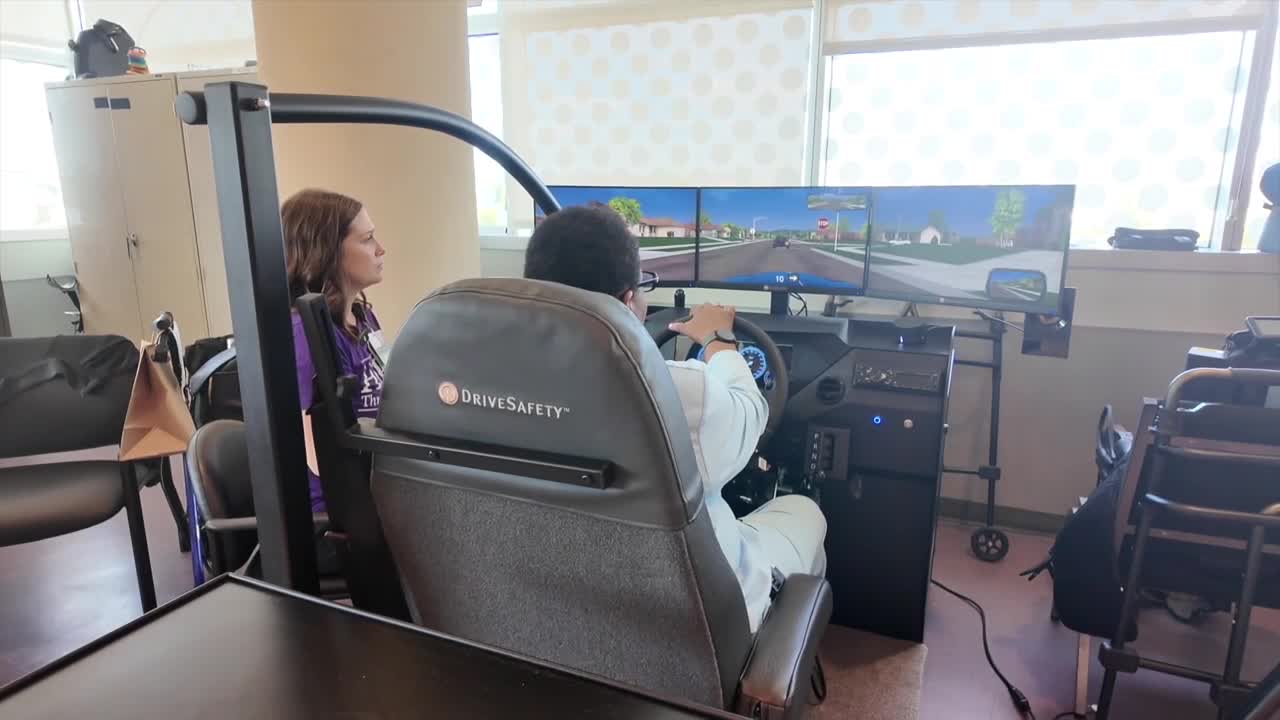
At the International Center for Spinal Cord Injury at Kennedy Krieger Institute in Baltimore, a new driving simulator is helping patients work toward that by giving them a safe environment to rebuild the skills and confidence needed to drive independently.
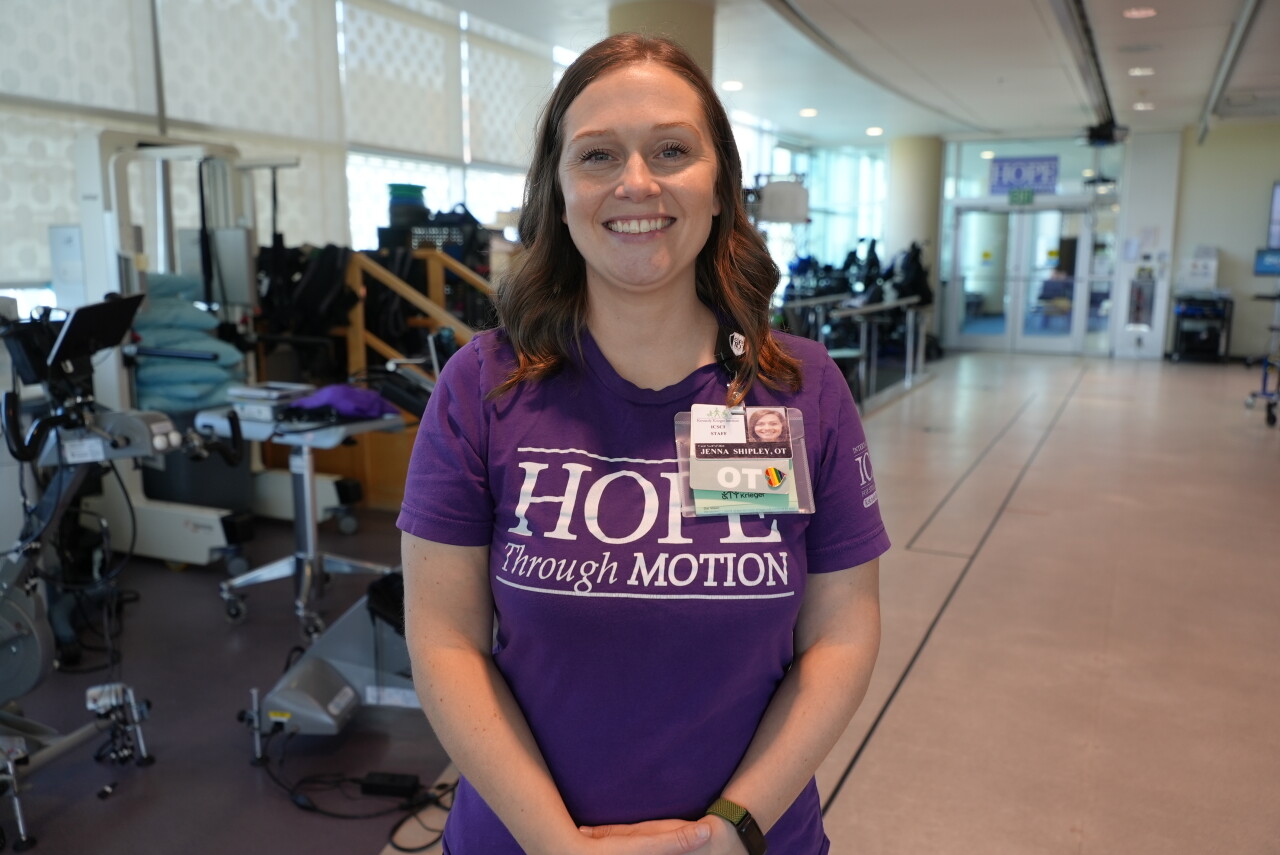
"Most of our patients, they don't even know that driving is a possibility after a spinal cord injury," said Jenna Shipley, an occupational therapist at Kennedy Krieger. "They think, 'I can't move my legs, how am I gonna drive a car?'"
One of those patients is Jean Hudson, who was diagnosed with transverse myelitis in 2017, a rare neurological condition caused by inflammation around the spinal cord.
"So I had to learn to walk all over again," Hudson said. "And something said, 'Jean, you gotta do this best you can do.' And I got up the next morning, and I kept working. I just worked hard because I wanted to get back to walking again."
After five months of rehabilitation, Hudson was back on her feet. Today, she continues to make progress at Kennedy Krieger.
"I'm at the point where I'm okay. I can use my walker, I can use crutches, but I want to drive," Hudson said. "I want to get back to that driving. Mobility only takes you so far."
That opportunity arrived in July when the center received a driving simulator thanks to a grant from the Samuel and Margaret Gorn Foundation.
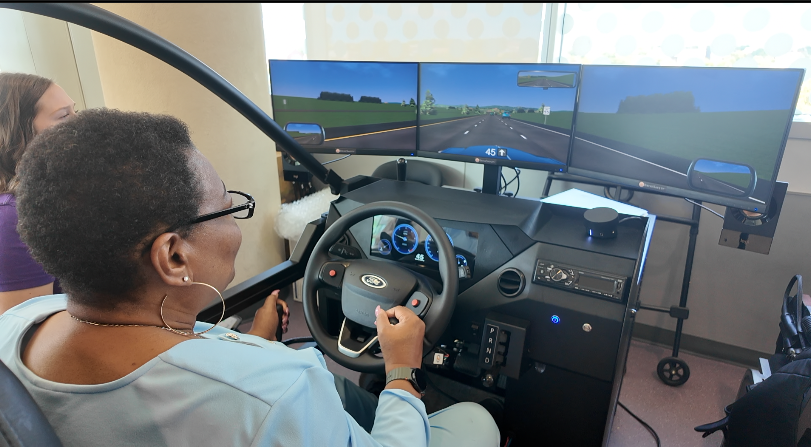
The simulator allows therapists to evaluate and train patients using a variety of real-world driving scenarios. It also includes adaptive equipment, such as hand controls, for patients who may not be able to use traditional foot pedals.
"There are tasks where they're driving in the city, in the country. We can work on turns and having to slam on the brakes if someone pulls out in front of you."
For therapists, the technology is about more than driving.
"We see people at their lowest point, when they're relying on other people to do things for them, to get them dressed, to bathe them," Jenna said. "Giving them back some of their independence is really rewarding."
Hudson has spent just over two months training with the simulator, and she's already seen significant progress.
"I just saw her progress throughout all the sessions that we did, and I feel like she's ready to get back to driving," she said.
Hudson believes she still has a little more work to do before returning to the road, but she's optimistic about what lies ahead.
"Maybe a month or two, because I still have things to work on," Hudson said. "I just want to make sure I'm really okay. But this place gives you hope. It really does."
Kennedy Krieger officials expect the simulator to help about 100 patients each year as they work to regain independence and return to daily activities that many once thought were out of reach.

