

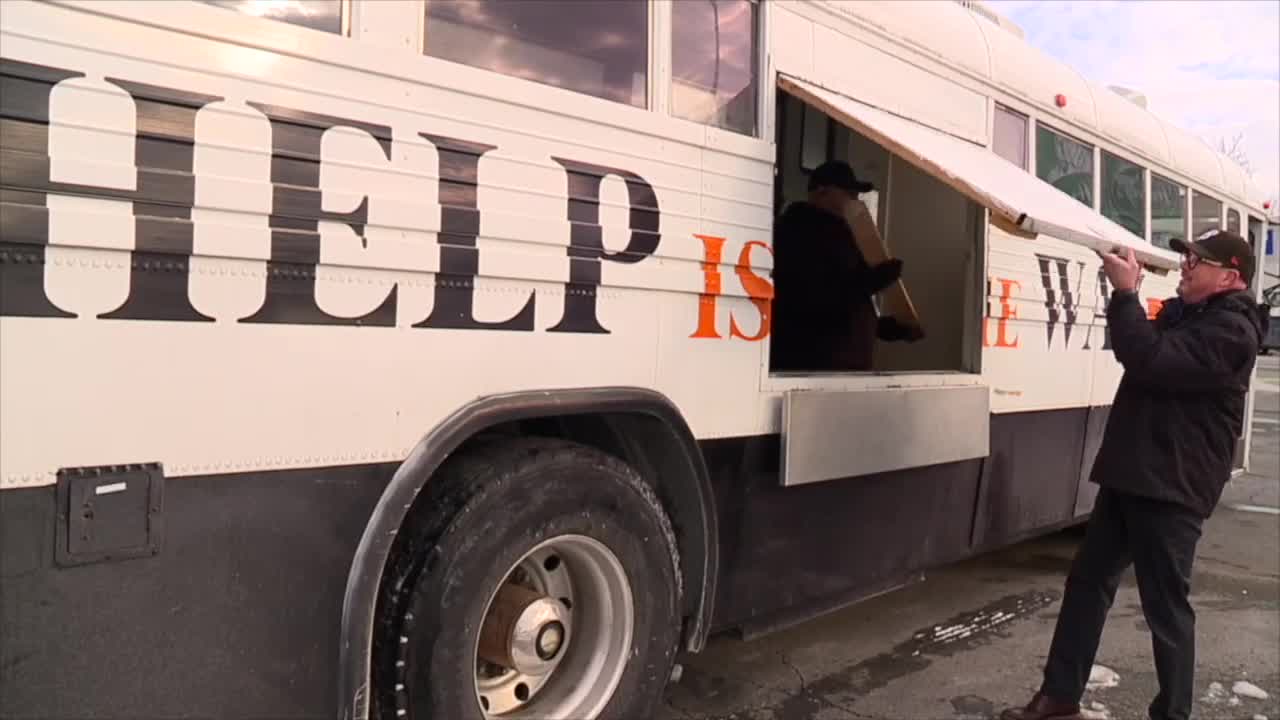


BALTIMORE — Helping Up Mission has unveiled a new Mobile Street Outreach bus to better serve people experiencing homelessness and addiction in Baltimore.
The new vehicle replaces their 1987 school bus, known by staff as “Old Smokey”.
It was purchased using funds from the City of Baltimore’s Opioid Restitution Fund. The city received the money following legal action against pharmaceutical companies over their role in the opioid epidemic.
Helping Up Mission leaders say the upgraded bus allows outreach teams to meet people where they are.
“You can't force somebody to be ready, but when they're ready for recovery, we wanna be there.” said Daniel Stoltzfus, CEO of Helping Up Mission.
The Mobile Street Outreach team visits 10 locations across Baltimore every week, including Cherry Hill, Brooklyn, and Penn North. By returning to the same places at the same times each week, staff say they are able to build trust over time.
“Sometimes individuals in need in our community who are living on the street get bounced around to a lot of different resources. If we can create those warm handoffs, having case managers out there saying, ‘This is where you were last week. Are you ready this week?" said Stoltzfus.
Inside the new bus, outreach workers distribute food, hygiene kits, and Narcan. The bus also includes a case management office and a food service window, allowing staff to begin one-on-one conversations and connect people directly to services.
In 2025, Helping Up Mission’s outreach team served more than 11,000 meals and conducted more than 1,000 case management assessments. Around 60 people were transported back to Helping Up Mission to begin its one-year recovery program, while thousands more received wraparound support.
Sometimes, Stoltzfus says, the work becomes a matter of life and death. He recalled one encounter with a man found immobilized behind a building, suffering from severe leg infections.
“We couldn’t leave him there,” Stoltzfus said. “Our team lifted him into the van, brought him back to Helping Up Mission, helped him get cleaned up, and then got him to the hospital the next day.”
That experience, he says, is a constant reminder of why the outreach program exists.
Peter Griffin, Director of Outreach and Intake for Helping Up Mission, says peer support is vital to their mission. Griffin is among the roughly 70% of Helping Up Mission employees who are alumni of the program.
“People need us to be out there,” Griffin said. “Not just to talk about recovery, but also give them a pathway to change their life around.
For more information about Helping Up Mission and its programs, visit helpingupmission.org.
