

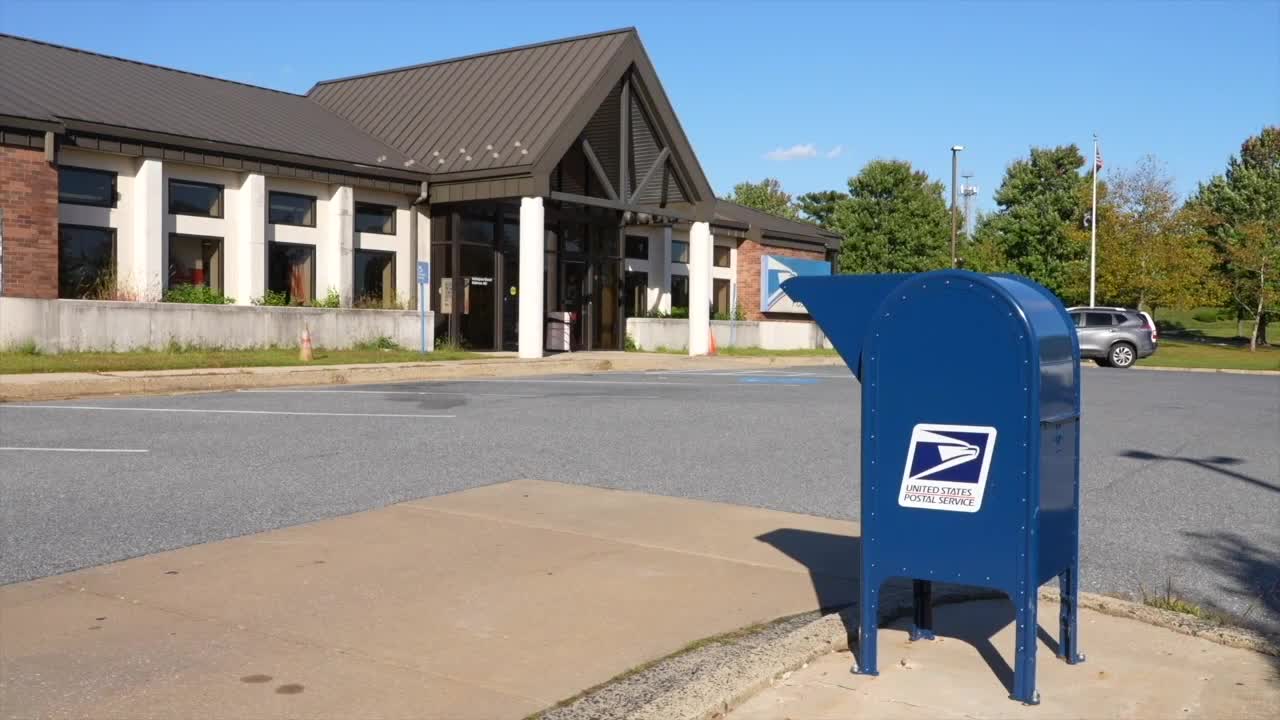


NOTTINGHAM, Md. — More customers are reporting checks that went missing after they mailed them from inside a post office. A White Marsh construction company says it’s paying extra for fraud protection because of the ongoing problems.
An employee of the company contacted WMAR-2 News' Mallory Sofastaii after our recent report about 25 checks mailed in one envelope from inside the Nottingham Post Office.
RELATED: 25 checks mailed inside Baltimore County post office go missing; 3 resurface altered for $35,000
Madge Jones wrote two of those checks for a community crab feast. Her organization’s secretary mailed them with 23 others. The checks totaled about $5,600, but three later resurfaced, rewritten for more than $35,000.
“One of those checks paid a $4,600 BGE bill, but it wasn’t mine,” Jones said.
An accounts payable employee for the construction company recognized the experience.
“So I pulled it up and I was like, huh, that looks familiar,” he said.
The employee asked not to be identified because of concerns about his job. He provided copies of three checks he says were mailed from Nottingham and later altered, along with three counterfeit checks the company never wrote or mailed.
He says he personally prepares the checks and drops them off inside the post office.
After earlier incidents, he largely stopped mailing checks from Nottingham. But this month, he was running late for an appointment and stopped there.
The same day he contacted WMAR-2 News, the bank flagged that check as altered.
The company pays extra for banking fraud protection because of these ongoing problems. He says the cost is modest compared with what it has helped the company avoid.
“In the last six years, we’ve saved tens of thousands of dollars,” he said.
The company is making more electronic payments, but he says checks are still common among the small, family-owned businesses it works with.
After our earlier report, many viewers suggested using gel ink to prevent check washing.
We asked Paul Benda, executive vice president for risk, fraud and cybersecurity at the American Bankers Association.
He says gel pens are recommended, but they won’t prevent all check fraud.
“When you give someone a check, you’re giving them a piece of paper with your name, your address, your bank account number and your bank routing number,” Benda said.
Even if someone can’t wash and rewrite your check, they can use that information to create another one.
“So while the gel pen might stop them from altering your check, it doesn’t stop them from printing checks in your name and using those,” he said.
That’s why Benda recommends electronic payments instead of mailing checks.
If you have to mail one, the association’s Practice Safe Checks website recommends taking it directly to the post office and sending it by Priority Mail.
Its other tips include:
- Use permanent gel ink.
- Give checks only to trusted recipients.
- Keep sensitive information out of the memo line.
- Check your account regularly for unauthorized transactions.
- Ask your bank about electronic payment options.
If you use online bill pay, ask how the payment will be delivered. Some payments may still be sent as paper checks.
Many of these recommendations fall on the customer, but Benda says banks and the Postal Service also need to do more.
“Banks need to do better at trying to notify customers when there’s, say, an out-of-normal transaction,” he said. “The post office needs to do better in terms of securing the mail, but consumers have a responsibility here as well.”
Report unauthorized transactions to your bank right away, and check your deposit agreement for reporting deadlines.
Report suspected mail theft to the U.S. Postal Inspection Service and suspected postal employee misconduct to the USPS Office of Inspector General.
A recent OIG audit identified mail security problems at several Baltimore-area post offices. USPS says it’s working to implement the recommendations.
Asked about the additional reports, the USPS Office of Inspector General confirmed the matter is part of an active investigation.
“To protect the integrity of the investigative process, we cannot release additional details at this time,” the office said. “We will provide updates when it is appropriate to do so.”