



BALTIMORE — Hundreds of thousands of Maryland residents who received unemployment benefits during the pandemic are now being told they may have to pay some of that money back, with state officials acknowledging that some notices may have been sent in error.
In December 2025, the Maryland Department of Labor sent more than 180,000 unemployment overpayment notices, according to a department spokesperson. Additional cases are still under review, with final determinations expected by the end of March. Many of the notices involve claims dating back several years, including those filed during the height of the pandemic.
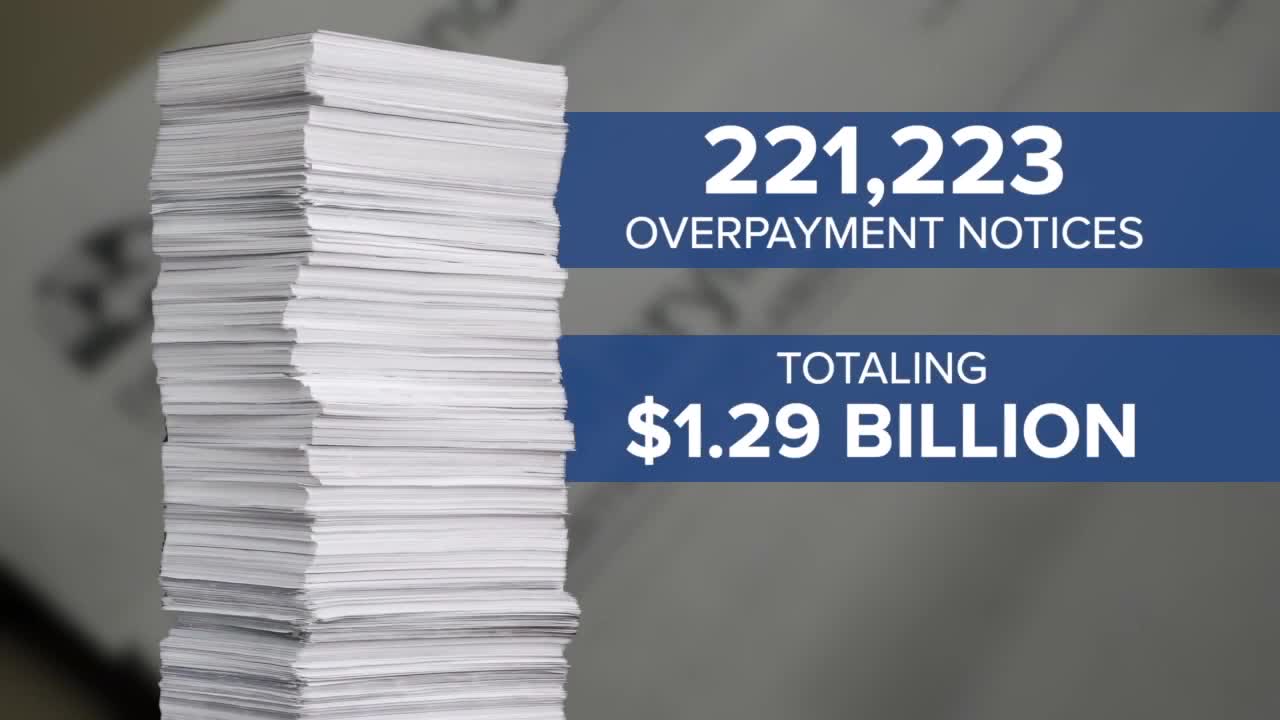
A recent state audit found the department expected to issue roughly 221,000 overpayment notices totaling nearly $1.29 billion. The report cited delayed collections and missed deadlines, which ultimately left hundreds of millions of dollars unrecoverable under state law.
READ MORE: Audit explains how Maryland Lost $760 million in unemployment overpayments
The notices have left many recipients confused and frustrated. Dozens of people have contacted WMAR-2 News Mallory Sofastaii saying they either legitimately qualified for benefits or previously reported fraudulent claims that they believed had been resolved years ago.
Theresa Wolf is one of them. She received a notice demanding close to $500 tied to a May 2021 claim, despite being employed at the time and having previously reported the claim as fraud to the department.
"I'm going to proceed with closing your case as of today, but if you have any questions, call," Wolf read from an email she had received from the department.
"What’s the date on that email?" Sofastaii asked.
"That is June 2, of 2022," Wolf replied.
The Pavlovich family also received overpayment notices totaling more than $5,800 between two family members. They said they legitimately received unemployment benefits for three weeks when they were out of work in April 2020.
"He said, oh that's a scam, because we just couldn't believe that this amount of time?" said Linda Pavlovich.
RELATED: Marylanders hit with unemployment repayment notices, some dating back to the pandemic
Maryland Labor Secretary Portia Wu explained the timing of these notices stems from legal requirements and previous administrative decisions.
"The prior administration turned off what's called overpayment recovery, which is getting back payments that shouldn't have been made. They turned that off. We've turned it back on in this administration that's part of responsible government. We are going back as far as we can where it's feasible to recover those payments," Wu said.
State law requires the department to issue notifications of overpayments within three years of payment. If an overpayment has not been recovered within five years of the overpayment determination, the Secretary may deem that amount uncollectible. A recent audit found the Maryland Department of Labor missed key deadlines to pursue unemployment overpayment recoveries, resulting in nearly $760 million that can no longer be collected.

An In Focus look at the unemployment numbers in Maryland
Wu said the notices recently issued are for overpayments the department believes it can lawfully collect within its legal authority, while acknowledging that some notices were sent in error or can be resolved quickly through identity verification.
"For some people, it was a valid unemployment insurance claim, but they didn't confirm their identity in the way they were required to. And the federal government is requiring us to make sure we check that people were who they said they were," Wu said.
The high volume of notices has created long wait times for claimants trying to resolve their cases.
"There were 900 people ahead of me in the whole queue and it would be 2.5 hours," Wolf said.
However, Wolf requested a callback and received one the next day. "And I'm confident that they will resolve it, eventually," she said.
Wu emphasized that victims of identity theft will not be required to repay fraudulent claims made in their names. Anyone who suspects they are a victim of identity fraud should email ui.fraud@maryland.gov or call 667-207-6520.
Wu also clarified that recovered funds serve specific purposes rather than filling budget gaps.
"Most of these funds were during the pandemic. Many of them were federal error benefits, which means if they're recovered, they will go back to the federal government or if they are state-level unemployment insurance funds, they will go back into the Unemployment Insurance Trust Fund to help other people who are unemployed, so it has nothing to do with closing the revenue gap," Wu said.
For those with valid overpayments, the department offers payment plans and financial hardship waivers. Claimants can also file appeals if they dispute the overpayment determination.
Wu said claimants who request callbacks should hear back within 24 hours. The department urges people to address the notices promptly, as unresolved overpayments could lead to financial penalties or problems filing for unemployment in the future.
The remaining cases under review are expected to have determination decisions made by the end of March, according to department officials.
Steps You Can Take
The department recommends claimants follow the guidance in their notification letter and at "Overpayments: Steps You Can Take". Some actions require a form and others should be initiated through a call, email, or portal action, as indicated in the guidance. For identity confirmation, claimants should be prepared to provide a government-issued photo ID, but they should start by emailing ui.overpaymentinquiry@maryland.gov, calling 667-207-6520 (Monday through Friday, 8 a.m. to 4 p.m.), or visiting the lobby of 100 S. Charles Street, Baltimore for in-person assistance, to discuss what is needed for their individual case.
The department says it experiences the highest call volume on Mondays and Tuesdays and suggests trying Wednesday through Friday.
This story was reported on-air by a journalist and has been converted to this platform with the assistance of AI. Our editorial team verifies all reporting on all platforms for fairness and accuracy.