



BALTIMORE — Maryland customers are seeing higher utility bills this winter as cold weather and rate increases drive up costs. At the same time, a recent change to state law has reshaped the residential energy supply market, leaving no retail energy suppliers currently offering service to homeowners.
Maryland’s energy choice system was created to allow customers to shop for electricity and gas suppliers that could offer lower prices or renewable energy options. Senate Bill 1, which took effect Dec. 31, 2024, placed new restrictions on how retail suppliers can operate. Since the law took effect, no retail suppliers are actively offering residential supply contracts in the state.
Marc Gluck, a former Constellation customer, said he felt the impact when he tried to renew his contract last year.
“I certainly preferred Constellation. We had them, we had no problems with them and their rate was lower,” Gluck said. “It was the same thing for less money.”
Gluck had signed a three-year contract that charged about 2.5 cents per kilowatt-hour less than BGE. He said the savings mattered, particularly because he and his wife are on a fixed income. When the contract expired, he said he was told it could not be renewed.
Chris Ercoli with the Retail Energy Advancement League, which represents retail suppliers, said Senate Bill 1 was intended to protect consumers but has had broader effects on the market.
“SB1 was trying to address consumer protections,” Ercoli said. “But it got into the accounting side of retail choice.”
Under the new law, suppliers are required to send separate bills, adhere to price caps tied to a trailing 12-month average of standard offer service rates, license sales agents who may not earn commissions, eliminate automatic renewals, and limit contracts to one year.
Ercoli said longer-term fixed-rate contracts previously helped some customers manage price volatility.
“Homeowners and small businesses would love a fixed service charge so they don’t have to wonder every six months whether their price is going to go up,” he said.
State officials point to a history of consumer complaints as the motivation behind the law. Over the years, regulators have issued millions of dollars in fines and ordered refunds after customers reported being switched without consent or locked into variable-rate contracts that later became more expensive.
The Maryland Office of the People’s Counsel supported Senate Bill 1 with amendments, saying the benefits of retail choice for residential customers had been limited. The office found that customers paid more on average and litigated cases in which suppliers overcharged customers millions of dollars.
People’s Counsel David Lapp acknowledged the law may have unintended consequences but said it does not address the biggest driver of high bills.
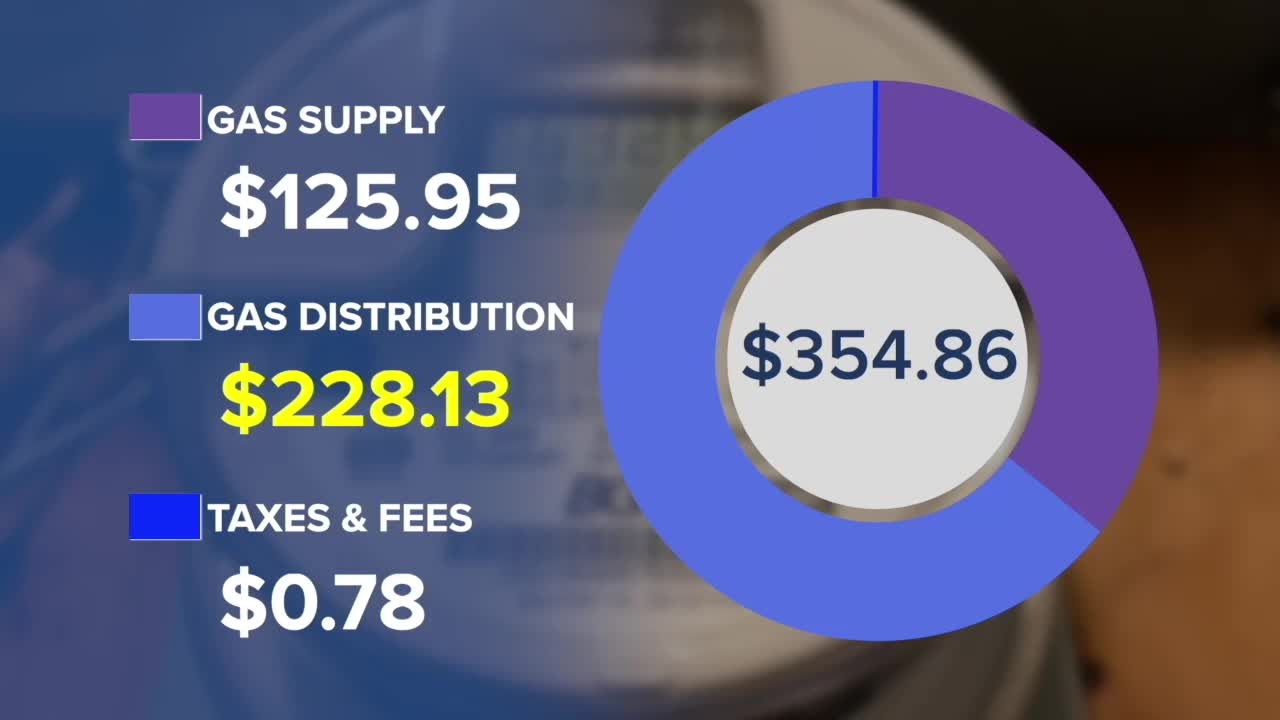
“The inability to shop does not change the costs that are really driving up customer bills, which are the delivery costs,” Lapp said.
Delivery charges, which customers cannot shop for, now make up the largest portion of many utility bills. BGE maintains the infrastructure that delivers electricity and gas, but some customers say they still want the option to compare suppliers.
“Let the best company win, as long as it’s fair competition,” Gluck said.
In a statement to WMAR-2 News, Senate President Pro Tem Malcolm Augustine, the sponsor of Senate Bill 1, defended the law’s impact:
"SB 1 2024 has saved hard working Marylanders over $220 Million across over 200,000 accounts since its passage on their energy bills. Suppliers are welcome to participate as long as they are saving Marylanders money. Supplies can even charge more for renewable energy but to date no supplier has made an offer. Not because suppliers can’t, but because suppliers haven’t. SB 1 2024 closed loopholes that allowed retail energy suppliers to profit by passing their cost of doing business on to all of us as rate payers. Anyone is free to sell energy in Maryland as long as they are saving Marylanders money."
This story was reported on-air by a journalist and has been converted to this platform with the assistance of AI. Our editorial team verifies all reporting on all platforms for fairness and accuracy.