



BALTIMORE — Hundreds of Baltimore homeowners are learning their properties still carry vacant building notices, and clearing that status could cost thousands of dollars.
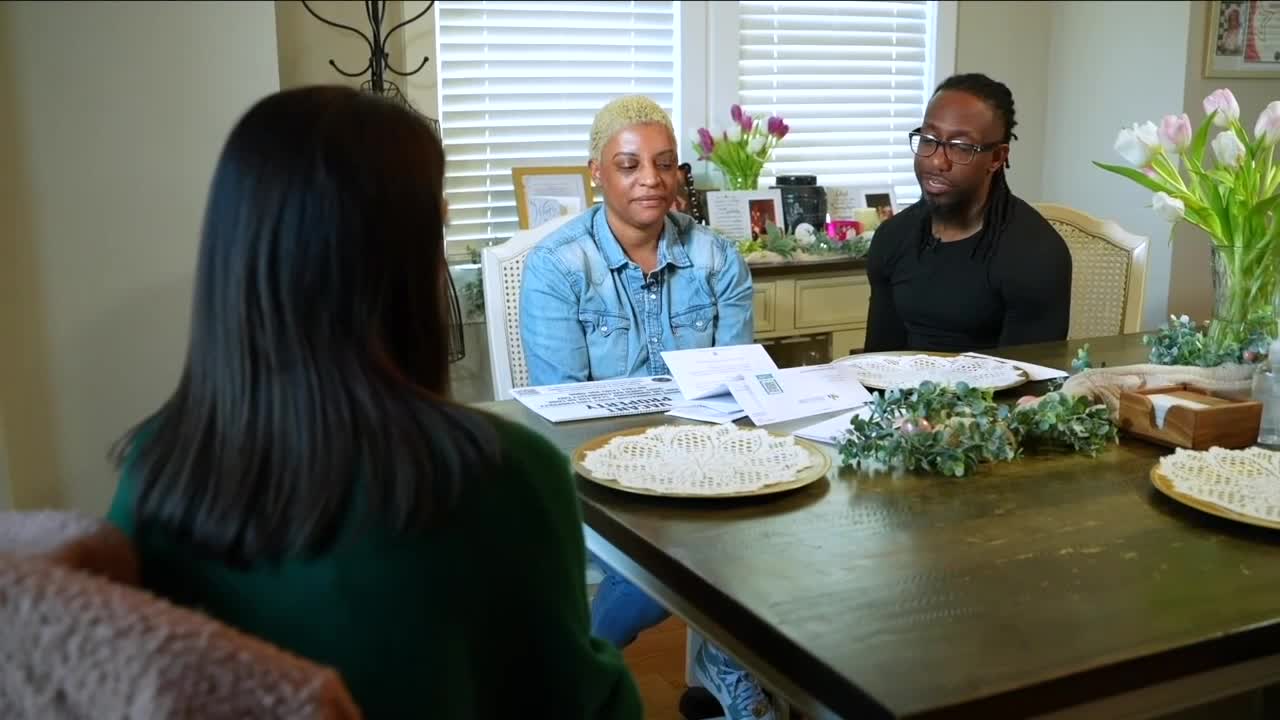
Robin and Jerome Richburg bought their Baltimore home in 2020. Six months after closing, they discovered the city still classified the property as vacant. The seller had never obtained a use and occupancy permit, and the home still carried a vacant building notice.
"This is something that you post on houses that are boarded up. Our house clearly isn't boarded up. We have porch furniture, you can tell that a family is here. In the springtime, we have flowers outside, so to see a vacant building notice [on our front door] it's just like, what?" Robin Richburg said.
The Richburgs say the vacant building notice was never disclosed to them before closing. The seller's agent said they didn't know. The seller, who purchased the property using an LLC, could not be reached. And the title company told the Richburgs this was not something they search for.
"Our family lives here, we have children. We would have never bought a home knowing that it didn't have a use and occupancy," Robin Richburg said.
The path to compliance started with a $1,200 electrical permit, but the Richburgs were then told they also needed plumbing and mechanical inspections.
"It's not as simple as they can just file a permit," Robin Richburg said. "So a new contractor coming in has to basically say, hey, this work is good, but it's not their work. Nobody's comfortable with that. So then it came down to maybe we'll have to open up some walls just to make sure that the work is good."
That's an expense and risk they weren't prepared to take on. Now, five years after purchasing the home, the family feels stuck.
"We paid a lot of money to live here and now we're responsible for someone else not thoroughly doing the paperwork and being left with the bill," Jerome Richburg said.
Starting in 2021, Baltimore law requires sellers to disclose if a property carries a vacant building notice, but Robin, who is a licensed realtor said this was not on their 2020 sales contract. She now diligently checks for this in home sales transactions.
That disclosure requirement was sponsored by Baltimore City Councilwoman Odette Ramos.
"There were several people that inadvertently bought properties that they thought were fully rehabbed but did not have a use and occupancy permit or any permits, frankly," Ramos said.
The city is now reaching out to the owners of roughly 400 properties who are living in rehabbed homes that may still carry a vacant building notice.
"We want to make sure that they're living in decent conditions, that they didn't just buy a lemon, but also, frankly, I mean just to be transparent, we have the vacancy tax coming. It is going to be implemented in July," Ramos said.
The new vacancy tax, also sponsored by Ramos, triples property taxes on vacant properties. She said it's needed to keep owners from sitting on blighted and dangerous structures, but acknowledges it could also affect families like the Richburgs who were caught in a situation they never anticipated.
"Anybody who thinks that they're in this situation should absolutely call Baltimore City Department of Housing and Community Development, or even our office to make sure that we can get them through the process of getting the proper permits and moving things forward," Ramos said.
Ramos also cautions that checking city permits alone may not be enough, as some contractors may bypass the process and the city's permit office is dealing with a backlog and other internal issues. She recommends buyers check for a vacant building notice by searching the property address on the city's CodeMap website and looking for a large red square.
A DHCD spokesperson said that even before the 2021 disclosure law, vacant building notices should have appeared on lien sheets provided to title companies before closing and homeowners in this situation should reach out to them directly for help navigating the steps to clear the notice.
This story was reported on-air by a journalist and has been converted to this platform with the assistance of AI. Our editorial team verifies all reporting on all platforms for fairness and accuracy.