




Across the country, pharmacies are closing at a rapid pace, and advocates are warning it’s a serious life-or-death situation.
“We’re starting to see that there's not only issues with access but also issues with the chronic diseases, people [in] emergency rooms, people get sicker and people really dying if we're going to be blunt about it,” said Magaly Rodriguez de Bittner, associate dean at the University of Maryland School of Pharmacy.
Watch: In Short Supply:
Why Maryland's pharmacies continue to close at an alarming rate
“I think we've said we're at a tipping point for too long, and we really are right now,” owner of Mount Vernon Pharmacy Stephen Wienner said. “I feel like the boy who cried wolf, that no one listens to.”
You might have seen it on your block. Boarded up windows, empty shelves, even gated off parking lots where a pharmacy used to be.
Last year, Rite Aid declared bankruptcy, leading to the closure of all of its remaining stores. CVS also recently closed 270 stores nationwide as part of a restructuring. And with every corporate closure, that’s even more pressure on independently-owned pharmacies that are already scraping by.
“Many of these pharmacies are closing in underserved communities where the local pharmacy really is the center,” DeBittner said.
Once thought to be a rural issue, that’s no longer the case.
In Maryland, more than 525,000 people are estimated to live in a pharmacy shortage area, about 8% of the population. The majority, represented by urban communities, 70.3%, according to the University of Southern California’s Pharmacy Access Initiative, which is working to track the problem.
38.1% of the shortage areas were considered low-income.

THE SYMPTOMS
A pharmacy desert is the term for when a person lives in an area without an accessible pharmacy nearby.
It depends on where they live. In an urban setting, if they don’t have vehicle access, it's considered a pharmacy desert if they are a 1/2 mile or more away from the nearest pharmacy. In a rural setting, it’s 10 miles or more.
On average, the U.S. population lives within five miles of a pharmacy. Rodriguez de Bittner says, we’re farther from that every day.
“Now we're starting to see that there are people that now need to travel 10-15 miles,” she said.
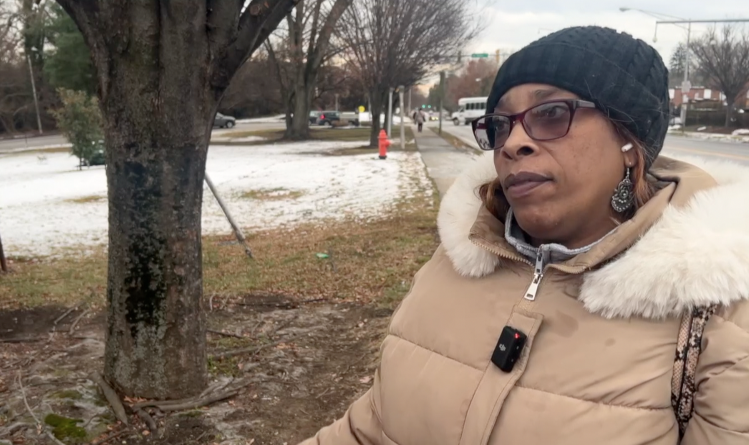
Tyra Walker has had to find a new pharmacy after her neighborhood's in Govans closed last year.
“It's a hassle. It’s already a hassle,” Walker told WMAR-2 News’ Blair Sabol. “I could have walked down the street. I was in walking distance. Now, I have to catch the bus up here.”
For Walker, it's not the bus ride to her new pharmacy that bothers her. It's that it could happen all over again. Then, where would she go?
Plus, it took 30 days to transfer her scripts to a new company. She's not only worried about herself, either.
“You gotta think about the senior citizens in this community, and you know, people that have mental illness and things like that. What are, what are they going to do?” She said.
State public records obtained by WMAR-2 News show the extent of the closures in the state of Maryland.
Over the last three fiscal years, 156 pharmacies and distribution centers have closed while only 97 have opened. In many cases, the openings are not close enough to the areas that have experienced closures.
The largest net loss is recorded in the zip code 21215, the Park Heights area, with six total closures.
THE DIAGNOSIS
Some have been quick to point out that certain pharmacies, especially chains, have suffered from routine shoplifting.
However, advocates say the main problem for the closures lies with the business model of drug reimbursement. They point to middle companies called Pharmacy Benefit Managers or PBMs.
80% of the marketplace is owned by three PBM companies: CVS Caremark, Express Scripts (Cigna), and OptumRx (UnitedHealth).
They control cost-reimbursements for drugs that pharmacies sell. Increasingly, they’ve been paying less and less.
“You're obligated to fill prescriptions for those claims that you lose, and then, you fill prescriptions till the store dies,” Weinner said. “We’re very easy pickings.”
“The contracts are take it or leave it,” Eric Yospa, owner of the Family Pharmacy in Hampstead, said.
The store is his father’s legacy, left to him to keep alive. These days, it’s no easy feat.
“You have patients that have been here for 20-25 years, known me since I was a little kid,” he said. “Sometimes we just can’t. We can't fill the prescriptions. We could lose over $100 to $200 on a prescription.”
Pharmacies are also facing clawbacks, where PBMs may take a chunk of money on the back end after insurance goes through.
“It happens all the time. It’s not supposed to,” Wienner said.
Wienner has offered to take on some clients after the recent closure of a hospital-based pharmacy, but did so only with the promise it’d be temporary.
“Can you imagine a business where you say yes, we'll help, but take the business back as quick as you possibly can? That's unheard of,” he said. “It’s not sustainable.”
Meanwhile, at the start of this year, Yospa cut ties with his business’s current PBM, through its contracting group, EPIC Pharmacy Network. He says it’s impacting many Medicare and elderly clients.
“They’re gonna have to go somewhere else, so that doesn't make them happy and it doesn't make us happy,” he said. “They're not gonna receive the same service they were getting here."
It’s a reality that advocates are afraid may only get worse if nothing is done soon.
“During COVID, pharmacies vaccinated this country. We were the safety net,” Wienner said. “It’s scary because you don't appreciate a safety net until it disappears.”
THE (POSSIBLE) CURE
At Yospa’s family pharmacy, they can do something called prescription compounding.
It means they can purchase the active ingredient of a drug that may be hard to get and put it in any form a patient may need.
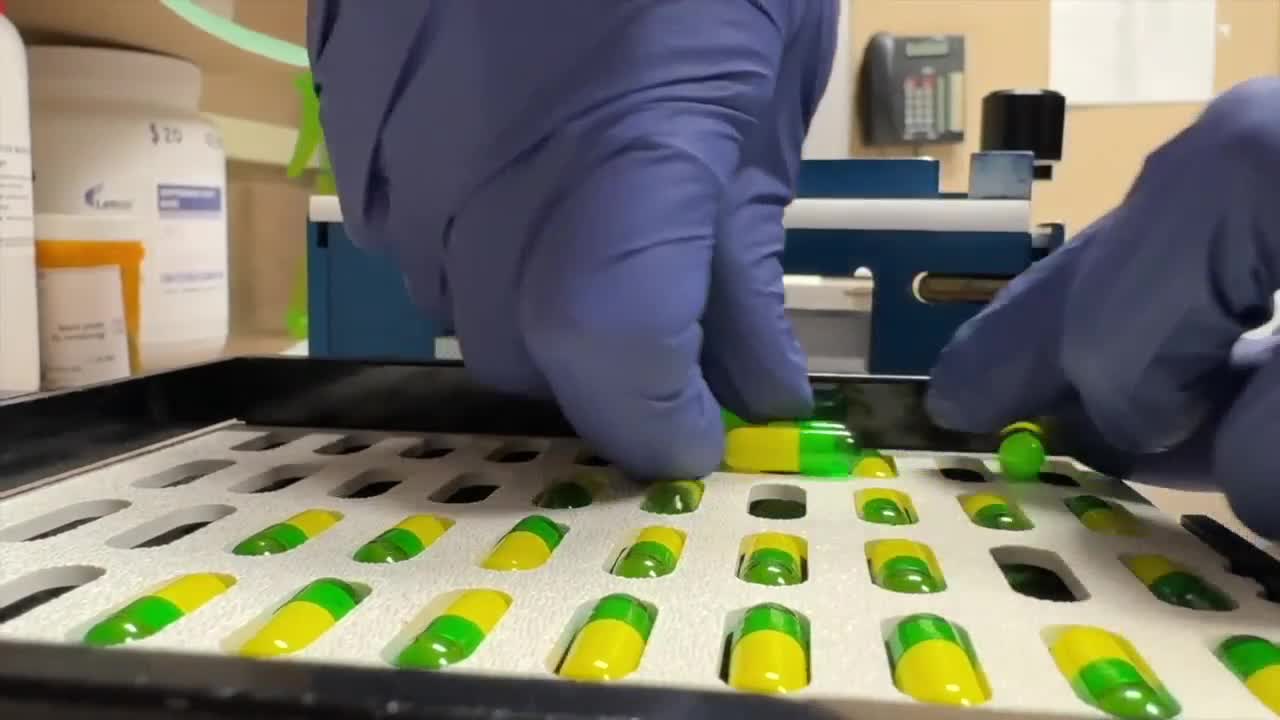
At Wienner’s store along Cathedral Street, robots help to count out pills. They also make specialty strip packaging and offer door-to-door prescription delivery services, for an extra fee.
If you ask him, pharmacies are in the best position possible to serve customers than ever before.
That is, if they can survive.
“We’re not just about counting pills and giving it to you in a bottle,” Rodriguez de Bittner said. “We are the healthcare provider that is accessible to the community that really keeps people healthy and out of the hospitals.”
Since 2023, emergency bills have been introduced in the Maryland state senate that would establish a minimum floor for PBM reimbursement, specifically for Medicaid users.
It’s failed to make it past the finance committee every time.
“I can tell you from a legislative point of view, the money that sloshes around makes Philip Morris and the NRA look like paupers,” Wienner said.
“Unfortunately, money talks,” Yospa said. “The patients suffer as a result.”
In 2025, Virginia implemented legislation to transition Medicaid to a single state-contracted PBM model to ensure consistent and equitable pharmacy reimbursement according to the American Pharmacist Association.
It also reports states like Indiana, Colorado, Iowa, Arkansas, and North Dakota have all passed PBM law reforms last year.
This legislative session in Maryland, it’s unclear if lawmakers will make another attempt themselves. Though Rodriguez de Bittner says they’ll keep trying.
“We’re trying to convince the legislature and the Maryland government: be proactive. let's not wait until we get to a critical number,” she said.

THE NEXT GENERATION
At the school, Rodriguez de Bittner says they’re working to better track pharmacy closures, and specifically the ones focused on what she calls “keystone” pharmacies.
Those are the businesses she describes as crucial to keeping communities in good health. Such as Wienner’s pharmacy, which has specialized in serving patients with HIV and AIDS in Baltimore City.
The school is also working to address another issue: A shortage of pharmacists to fill the future’s prescriptions.
They’ve created a trademarked named program called “pharma-preneurship” to encourage the next generation to be creative problem solvers, because the health of the industry directly translates to the health of the community.
“Let’s create solutions that you have the tools to make a difference," she said.