

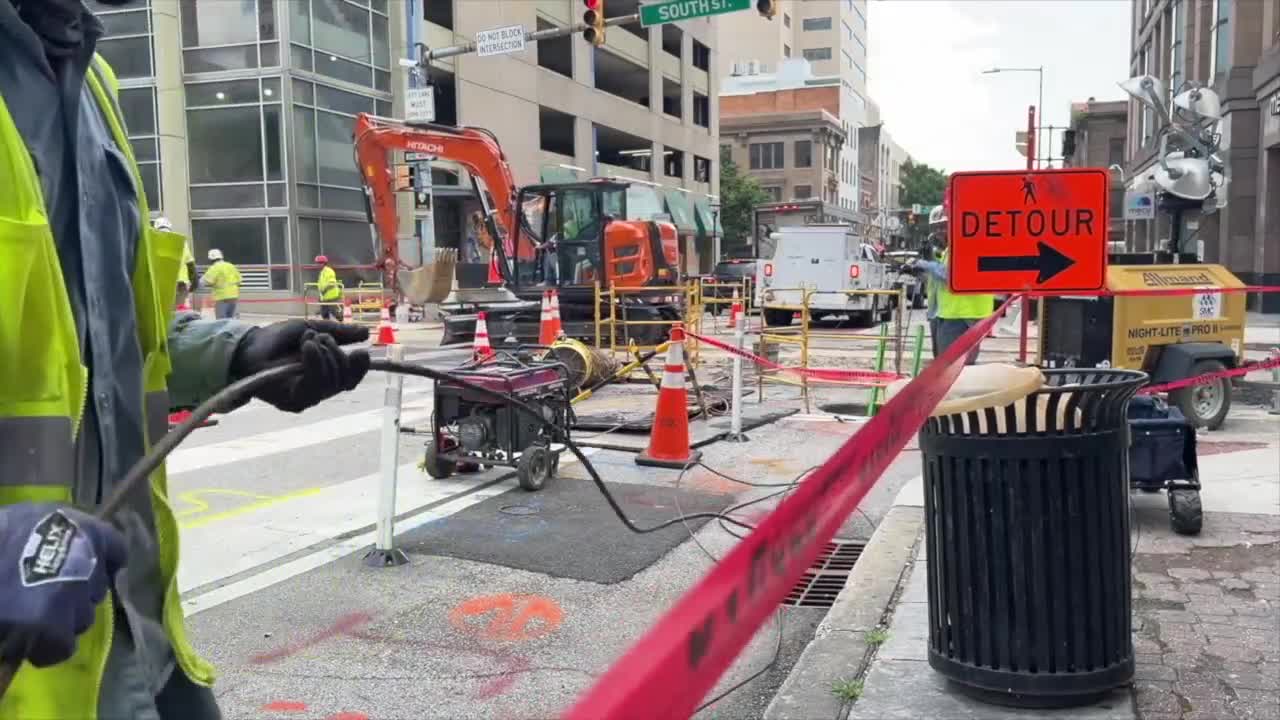


BALTIMORE, Md. — Except for the occasional fire beneath the road’s surface in Baltimore in recent years, you wouldn’t know about the electric lines and fiber optics stuffed in the city’s ancient conduit system, but your about to pay more for them on your BGE bill.
“Baltimore City just approved a significant fee increase that essentially amounts to a tax that could add millions of dollars to customers’ bills,” said BGE President & CEO Tamla Olivier.
BGE estimates it’s 50 million dollars that it will be paying now that its agreement to use the space has expired---a rate increase, which it claims will be passed on to customers both inside and outside the city at an estimated eight dollars per month.
“So far the city has not given us anything that would support an 84 percent increase,” said Olivier, “That’s why today, we filed a request with the Maryland Public Service Commission to change how these costs are allocated so that customers outside of Baltimore City are not absorbing these costs that are unjustified by the city.”
In the three-and-a-half years that the company had an agreement with the city, it claims it rebuilt or replaced 66 manholes and installing 400 thousand linear feet of cable while spreading out the costs to customers.
Meanwhile, it claims the city’s newly proposed budget designates nothing for the system’s maintenance.
“That 50 million dollars is an annual increase. It’s just cash going to them single year. 50 million dollars,” said BGE Vice President of Regulatory Policy & Strategy John Frain, “Our concern is that 50 million dollars a year, the city has not shown what those funds would be used for, has not shown that it’s actually going to be invested in the conduit system.
While the city argued in ending its previous agreement with BGE that it would strengthen reliability and reduce safety risks, the claims the city has refused to produce evidence that any of the 375 million dollars given to it over the last ten years has been invested in the system’s upkeep.
BGE claims customers would see the increase in their bills if the city’s rates are approved on January 1, 2027.

